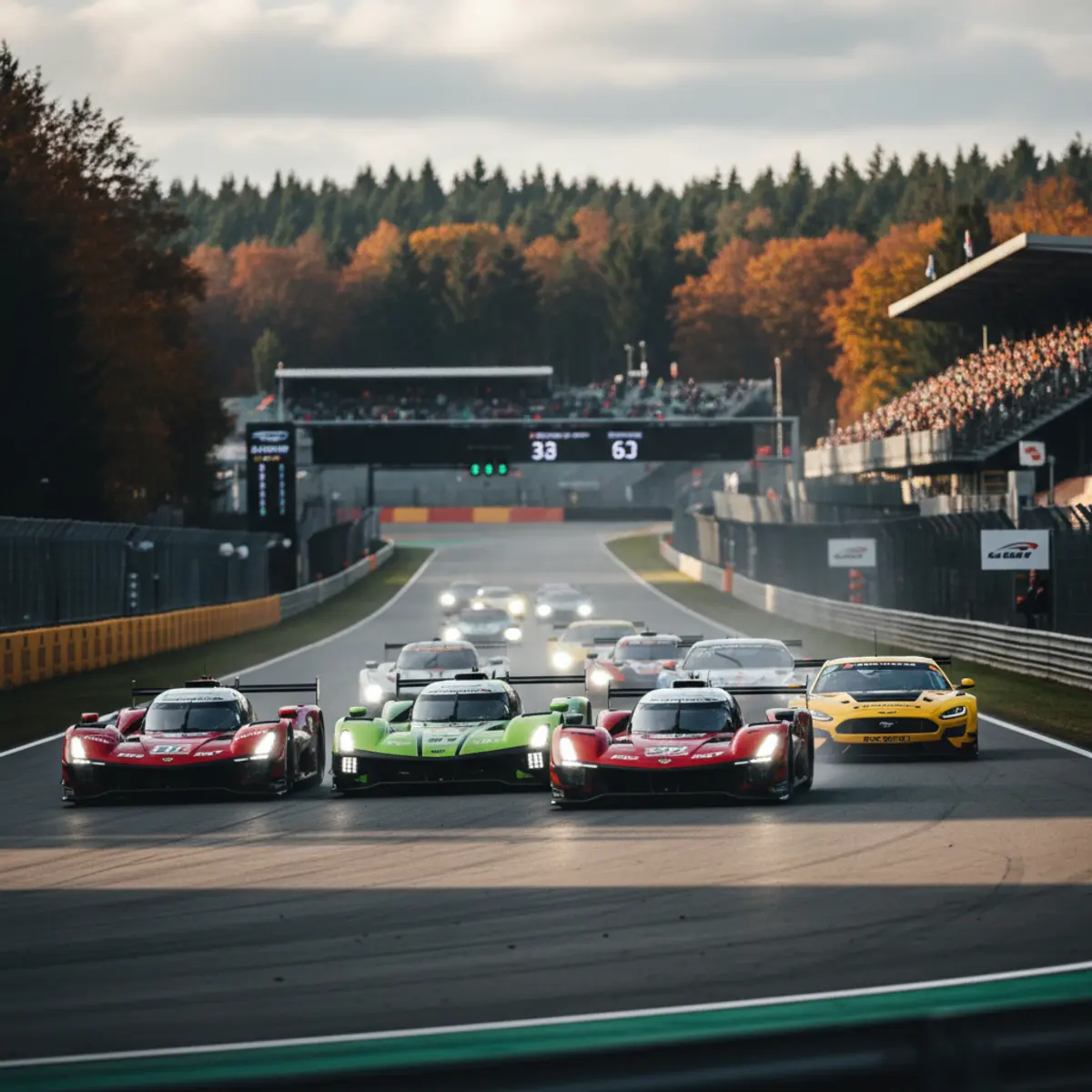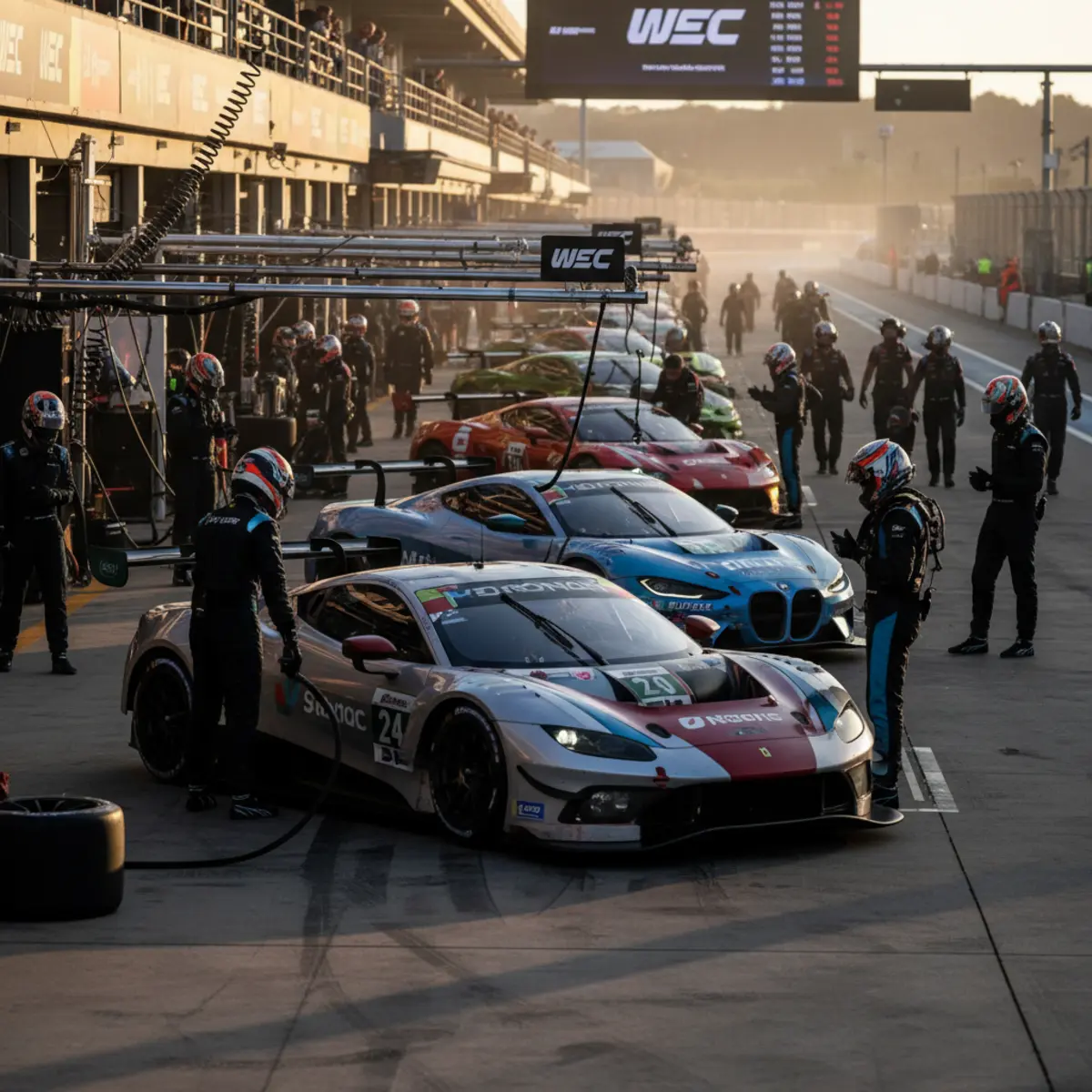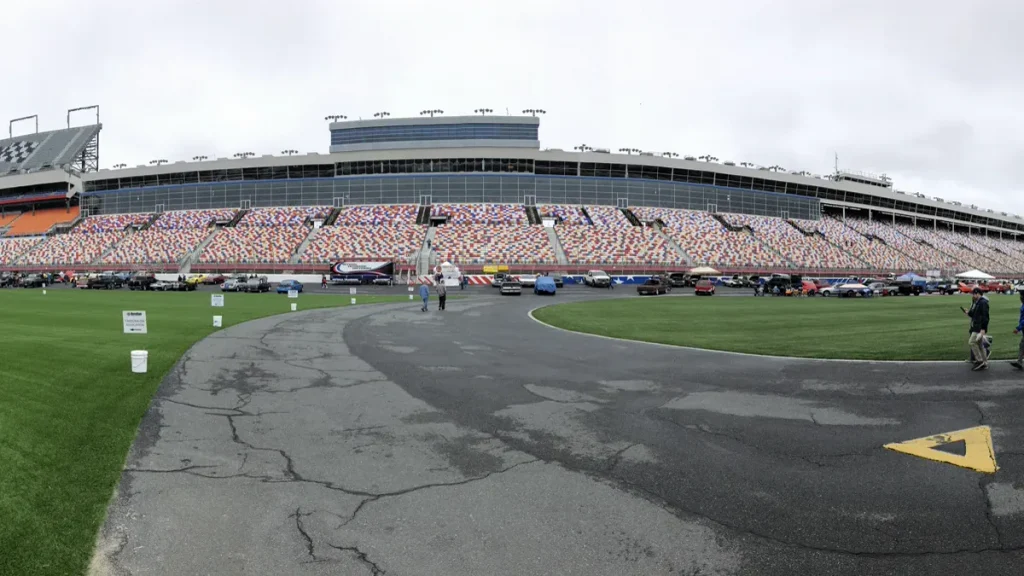
The short lap: The Charlotte Roval braking zones punish Cup Series equipment at three key deceleration points: the Turn 1 infield entrance, the backstretch chicane, and the final frontstretch chicane. Drivers drop from 165 mph to 45 mph while wrestling Next-Gen independent rear suspension across harsh transition curbs.
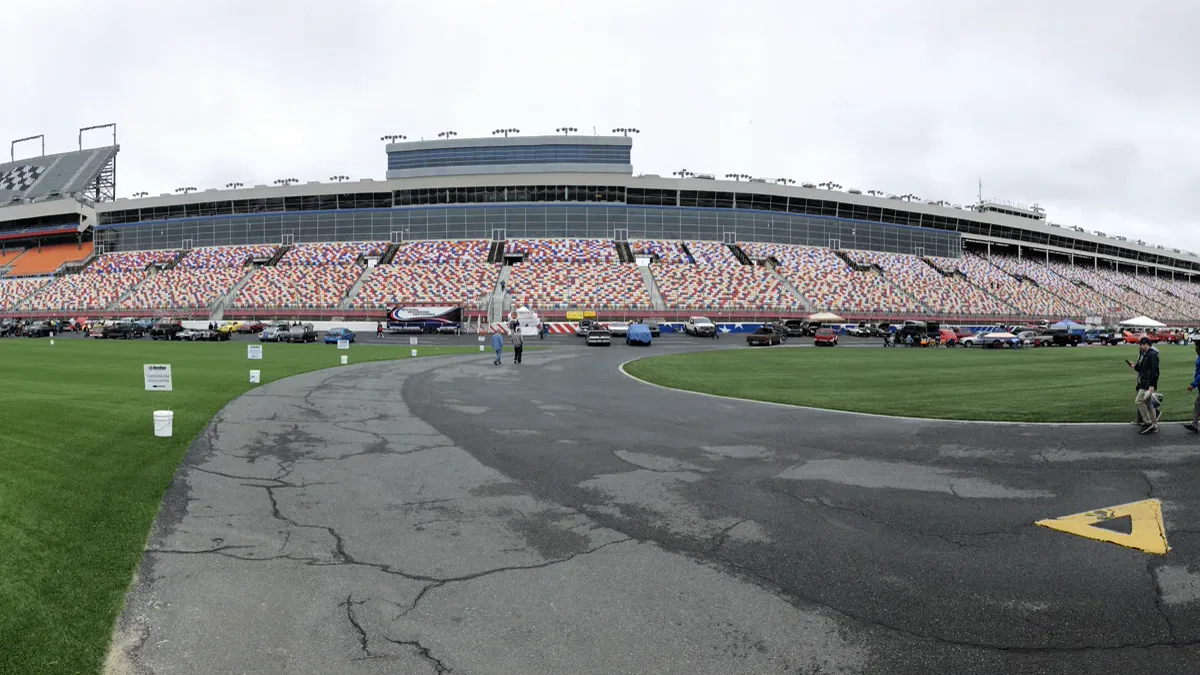
High banking meets tight pavement. Charlotte Motor Speedway transforms its high-speed 1.5-mile quad-oval into a seventeen-turn obstacle course for the NASCAR Cup Series Playoffs. When autumn championship elimination hangs on a single point, stopping a 3,500-pound stock car demands flawless footwork and extreme mechanical discipline.
Why do the charlotte roval braking zones trigger playoff chaos?
The Charlotte Roval serves as the cutoff race in the Round of 12, forcing title contenders into desperate late-braking lunges. Heavy cars, composite bodies, and sudden asphalt transitions produce lockups and spins. A single missed braking mark destroys a season of championship points in seconds.
Stock car racing on hybrid road-oval circuits creates a unique engineering headache. Brakes glow red across the charlotte roval braking zones. Drivers approach Turn 1 at 165 miles per hour on the 24-degree banked superspeedway surface. They must instantly transition to flat, unbanked infield concrete while stomping on the pedal with over 1,200 pounds of hydraulic line pressure.
The margin for error throughout the charlotte roval braking zones is microscopic. Unlike traditional road courses with grassy runoff, the Charlotte Roval is bordered by steel SAFER barriers and temporary tire walls. Missing a brake apex by two feet means hitting a concrete boundary or jumping high turtle curbs. Suspension arms fracture easily under direct curb strikes.
Sanctioning body data published by nascar.com demonstrates that brake rotor temperatures routinely exceed 850°C during prolonged green-flag runs. When rotor temperatures rise above optimal ranges, pad friction fades rapidly, extending stopping distances just as drivers battle for transfer positions.
How do Next-Gen suspension setups handle road course curbs?
The Next-Gen chassis features independent rear suspension, rack-and-pinion steering, and massive 15-inch AP Racing monobloc brakes. These modern components allow far more aggressive curb hopping than legacy solid-axle cars. However, stiff damper valving can launch the rear tires airborne, causing abrupt wheel spin on corner exit.
Suspension travel is severely limited to keep the flat underbody splitter sealed against the asphalt for maximum downforce. When a driver strikes the blue rumble strips at speed, the stiff suspension transmits instantaneous shock loads through the transaxle and upright assemblies. Compromise is necessary at every corner.
| Braking Zone / Corner | Entry Speed | Apex Speed | Deceleration G-Force | Key Mechanical Hazard |
|---|---|---|---|---|
| Turn 1 Infield Dive | 162 – 168 mph | 48 – 54 mph | 1.85 G | Abrupt transition from 24-degree banking to flat asphalt |
| Turn 3-4 Hairpin Complex | 85 – 92 mph | 38 – 42 mph | 1.30 G | Front-right tire lockup on off-camber concrete |
| Backstretch Chicane (Bus Stop) | 158 – 164 mph | 52 – 58 mph | 1.95 G | Curb strike unsettling underwing aerodynamics |
| Frontstretch Final Chicane | 125 – 132 mph | 42 – 46 mph | 1.60 G | Wheel hop under hard trail braking toward start-finish |
Tuning the five-speed sequential gearbox and five-way adjustable dampers requires finding compliance over curbs without inducing bottoming out on the high-speed oval segments. If setup engineers make the suspension too soft, the car scrapes the oval transitions, losing floor suction. Stiff setups preserve aero platforms but punish driver endurance.
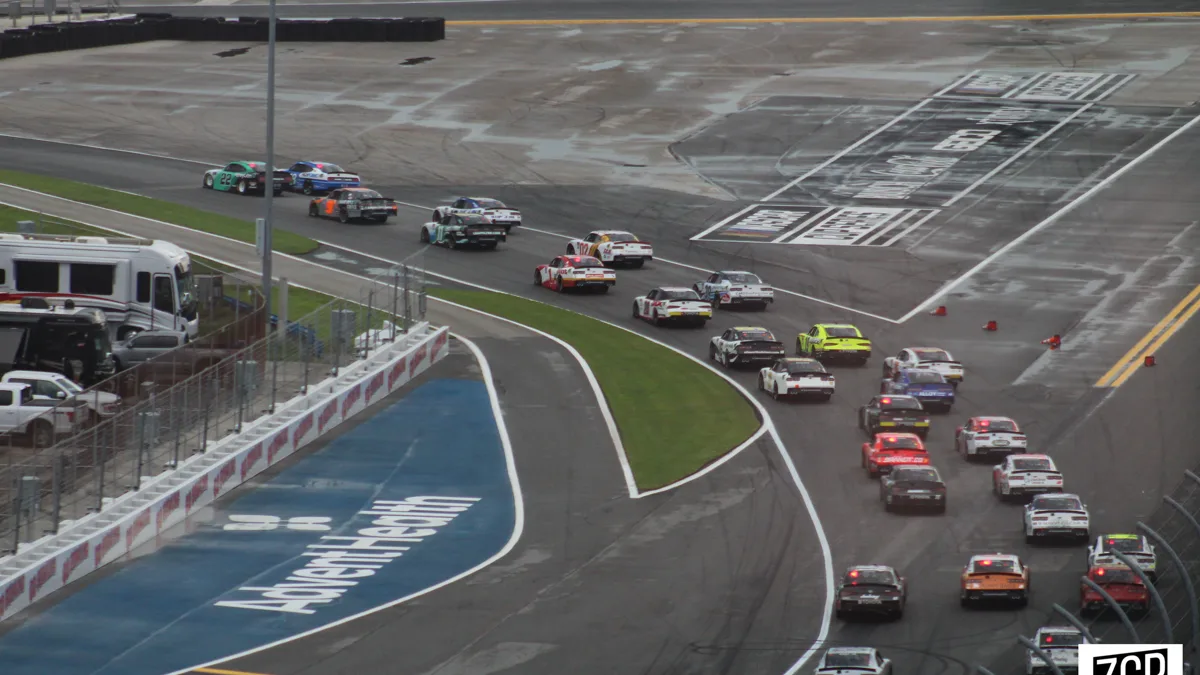
Which corners create primary overtaking and threshold braking hotspots?
The two most prolific passing locations on the 2.28-mile layout are the Turn 1 infield entrance and the backstretch chicane. Drivers exploit aerodynamic slipstreams along the high-banked oval before ducking underneath rivals into narrow deceleration corridors. Inside passes require exceptional pedal modulation.
Weight transfer is violent. When deceleration begins, thousands of pounds shift onto the front 365mm steel rotors and Goodyear Eagle radials. Drivers trail off the brake pedal as they turn the steering wheel to prevent locking the inside front tire. Flat-spotted tires create massive vibrations that destroy front-end grip for the remainder of a tire run.
Modern stock car geometry rewards precise pedal pressure rather than raw aggression. Key corner attributes include:
- Turn 1 Infield Transition: The car slides downhill while turning left into an off-camber entry. Rear grip drops sharply as the car unweights over the seam.
- Infield Hairpin Complex: Low-speed directional changes demand quick steering inputs and progressive throttle application to avoid spinning the wide rear slicks.
- Backstretch Chicane Curbs: Drivers bounce across high raised curbs to straighten the racing line, risking transaxle damage on hard landings.
- Frontstretch Pit Entrance Complex: The final tight chicane leads directly onto the banked frontstretch, making exit traction critical for drafting toward Turn 1.
Understanding stock car weight transfer and cockpit dynamics is essential for fans analyzing race strategy, similar to the vehicle dynamics explored in our stock car racing guide. Race control closely monitors chicane shortcutting, issuing instant stop-and-go penalties to any car failing to keep four tires within track boundaries.
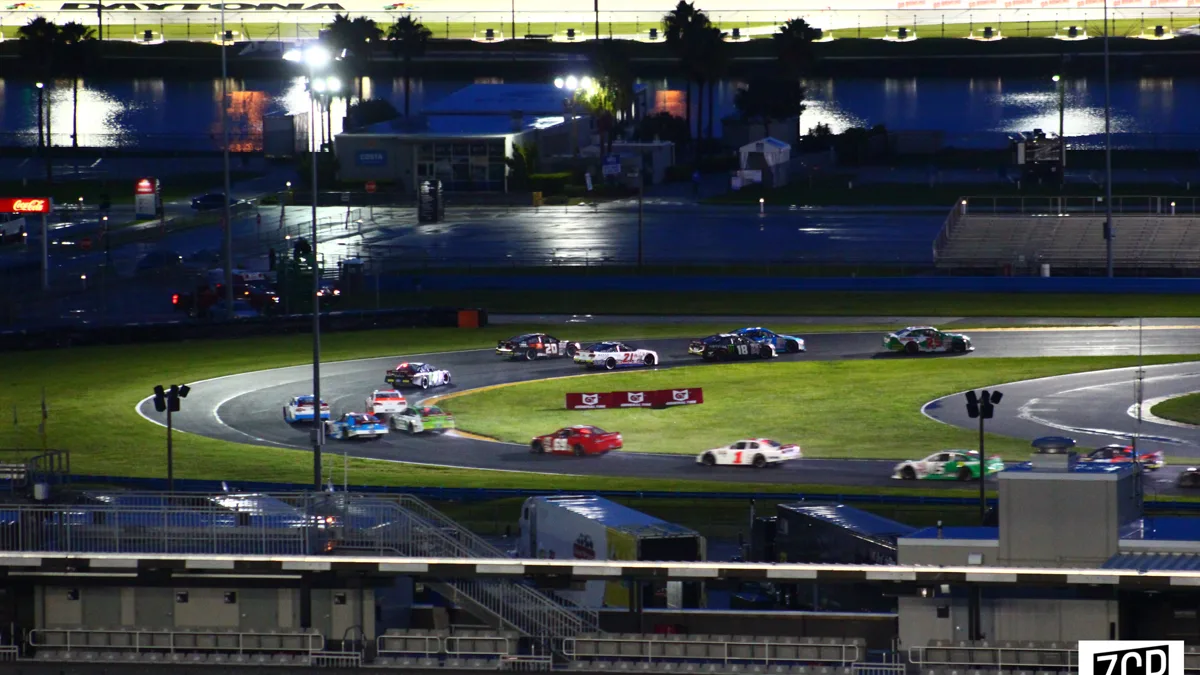
How do drivers balance brake bias between oval banking and flat chicanes?
Drivers use a cockpit brake bias knob to dynamically adjust hydraulic pressure distribution between front and rear calipers throughout every lap. Adding front bias prevents hazardous rear-axle wheel hop during straight-line braking, while moving bias rearward helps rotate the chassis through slow infield corners.
Cockpit adjustments are constant. On the oval portion of the lap, the car relies on banking to generate lateral load. Entering the flat chicanes, however, weight distribution shifts drastically. Experienced veterans dial the bias forward by two to three clicks before entering the backstretch chicane to stabilize the rear under maximum deceleration.
Brake cooling ducts also play a major aerodynamic role. Teams tailor carbon duct openings to manage pad wear over 109 grueling laps. Excessive cooling airflow increases aerodynamic drag across the front bumper, reducing straight-line speed on the long oval stretches. Teams must strike a fine balance between rotor thermal health and top-end velocity.
Detailed event timing updates and track configuration data from charlottemotorspeedway.com show that late cautions bunch up the field, turning every restart into a wild scramble. The driver who manages brake fade best over long runs holds a decisive tactical advantage when the checkered flag waves.
Charlotte Roval Braking Zones and Next-Gen FAQ
What is the top speed approaching the Charlotte Roval braking zones?
Cup Series cars reach approximately 165 mph along the front straight and 162 mph down the backstretch oval before hitting the brakes for the infield entrance and the backstretch chicane.
Why do drivers get penalties in the Charlotte Roval chicanes?
NASCAR strictly enforces track limits at both chicanes. If a car cuts the curb and fails to keep all four tires on the marked racing surface, the driver must serve an immediate stop-and-go penalty on track or at pit road entrance.
How heavy are Next-Gen NASCAR Cup cars during braking?
Next-Gen Cup Series cars weigh approximately 3,450 to 3,500 pounds with driver and fuel. Stopping this heavy mass from 165 mph creates massive kinetic energy that heats brake rotors to over 850°C.
How many turns are on the Charlotte Roval road course?
The official competition layout spans 2.28 miles and features seventeen turns, combining traditional Charlotte Motor Speedway oval banking with an intricate multi-turn infield road course.
How we researched this: Rhett Calloway analyzed NASCAR Cup Series telemetry traces, brake temperature telemetry, and tire degradation logs from Charlotte Motor Speedway road course competition.