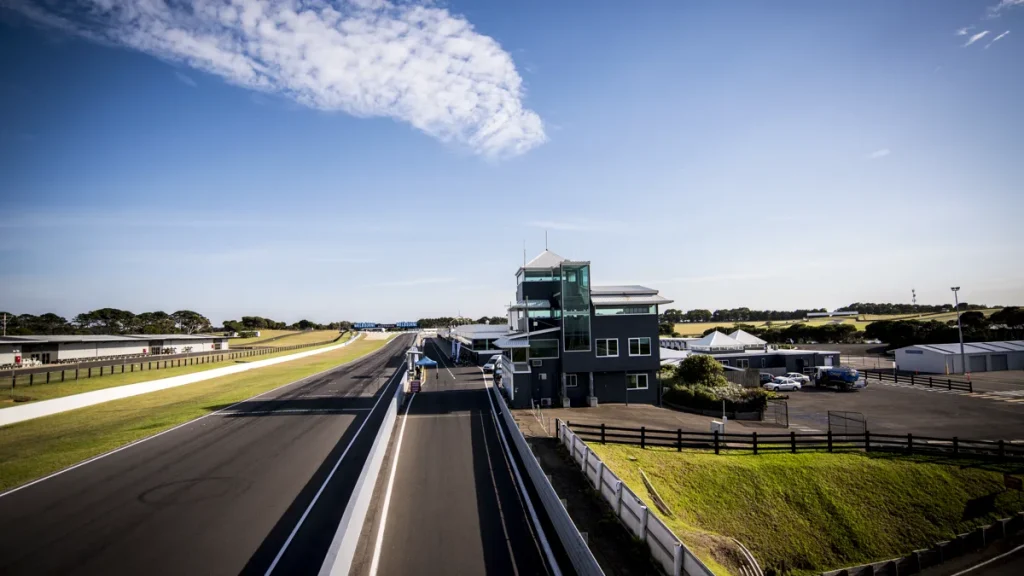
The short lap: Modern Phillip Island MotoGP aero configurations struggle against unpredictable coastal crosswinds gusting over 60 km/h from Bass Strait. High-downforce carbon winglets generate asymmetric lateral forces at 340 km/h, forcing teams to trim aerodynamic appendages to maintain high-speed stability through Doohan Corner.
Southern Ocean gales sweep directly across the cliff tops of Victoria. Phillip Island Grand Prix Circuit presents the fastest average lap speed on the world championship calendar. When prototype grand prix motorcycles hurtle down Gardner Straight at 340 kilometers per hour, aggressive carbon fiber aerodynamics become a dangerous double-edged sword.
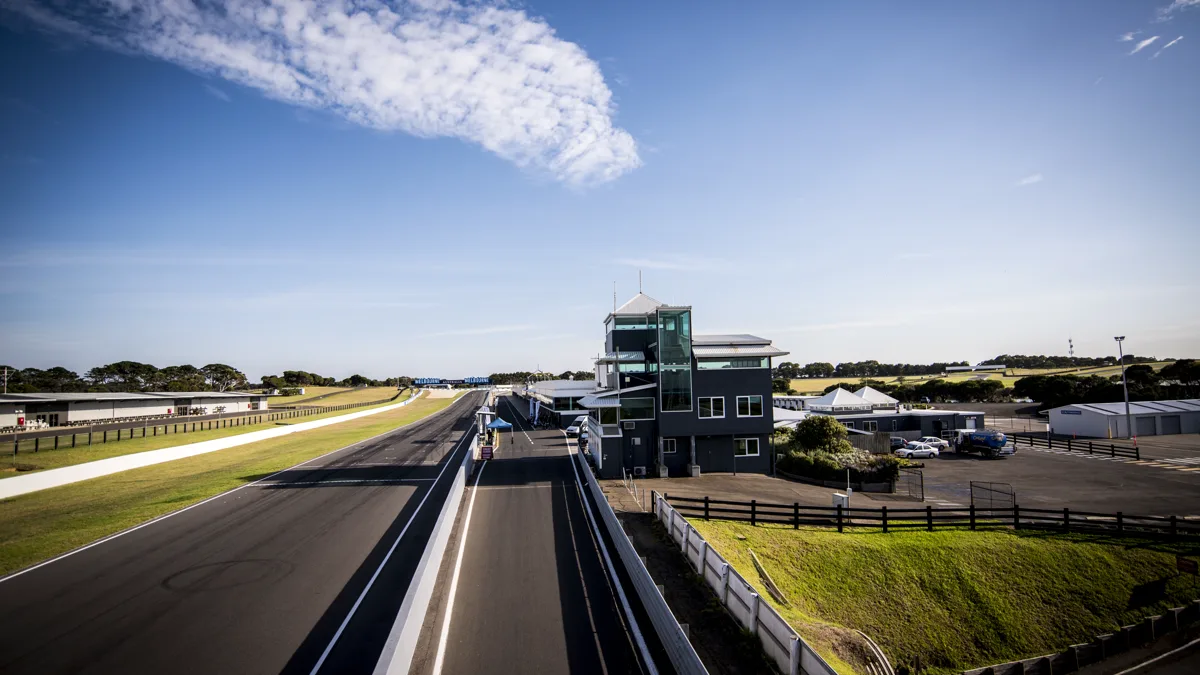
Why does phillip island motogp aero face unique aerodynamic tests?
Phillip Island features sustained high-speed curves combined with sudden ocean gale gusts that disrupt laminar airflow. Unlike modern stop-and-go tracks designed with tight hairpins, this flowing seaside layout requires neutral handling. Excessive downforce makes rapid direction changes physically exhausting while lateral wind gusts push front tires off line.
The geography of the circuit leaves competitors completely exposed to maritime squalls. Wind shifts instantly from a headwind to a sudden lateral gale. Prototype motorcycles generate immense front-wheel downforce to prevent wheelies on acceleration. However, when side winds strike wide carbon winglets, the bike acts like a sail, pushing riders toward track limits.
Rider safety prompted urgent technical discussions with the sport governing body on motogp.com. Following severe crosswind incidents where front wheels were blown offline entering Turn 1, officials introduced specialized regulations. Teams are permitted to remove outer aero winglet side-pods specifically when hazardous weather threatens the Australian round.
Telemetry data confirms that downforce levels must be dialed back deliberately. Engineers willingly sacrifice acceleration anti-wheelie performance to restore steering obedience. Balancing front downforce against lateral wind sensitivity remains the most delicate engineering challenge of the season.
How do ocean crosswinds destabilize prototype winglets at 340 km/h?
When crosswinds hit an aerodynamic fairing, the windward winglet produces increased lift or erratic downforce while the leeward winglet stalls in turbulent wake air. This creates an immediate yaw moment that twists the handlebars in the rider hands, inducing terrifying high-speed tank-slappers across Gardner Straight.
Motorcycle aerodynamics differ fundamentally from automotive downforce systems. Cars remain flat on four wheels, whereas grand prix bikes lean at angles exceeding sixty degrees. Modern fairings incorporate intricate ground-effect diffusers on the lower belly pan that suck the chassis toward the asphalt during maximum lean.
| Aerodynamic Component | Standard GP Downforce | Phillip Island Modified Aero | Crosswind Sensitivity | Rider Handling Impact |
|---|---|---|---|---|
| Upper Front Winglets | 35 – 42 kg @ 300 km/h | Trimmed / Removed (15 – 20 kg) | Extremely High | Reduces front-end twitching in sudden cross gusts |
| Ground-Effect Lower Fairing | 18 – 25 kg in lean | Retained with slotted ducts | Moderate | Maintains mid-corner edge grip through fast sweepers |
| Stegosaurus Tail Fins | 8 – 12 kg braking stability | Standard configuration | Low | Stabilizes rear tire tracking under straight-line braking |
| Front Wheel Cover / Fork Vanes | Smooths rim turbulence | Minimal profile or removed | High | Prevents side-force steering deflection on main straight |
Asymmetric aerodynamic loading creates violent steering oscillations. Riders must lean into the wind simply to travel in a straight line. If the crosswind suddenly drops behind trackside grandstands, the bike immediately snaps in the opposite direction. Human reflexes must compensate for invisible aerodynamic forces thousands of times per race.
Which corners expose aerodynamic fairing vulnerabilities most?
Doohan Corner, Stoner Corner, and the final sweeping Turn 12 represent the highest-risk aerodynamic sectors on the circuit. Entering Turn 1 at 340 km/h downhill requires absolute faith in front-tire contact. If an ocean gust detaches airflow from the front aero elements, front-end mechanical grip vanishes instantly.
Turn 3, famously named Stoner Corner, is taken in fifth gear at over 220 km/h with the rear tire drifting outward toward Bass Strait. The bike is leaned over hard on the left tire shoulder. Sudden crosswinds hitting the exposed right-hand fairing create a rolling torque that threatens to tuck the front tire without warning.
Modern downforce packages create distinct behavioral traits across Phillip Island key sectors:
- Gardner Straight Descent: Bikes crest the rise past pit wall at terminal velocity while enduring full lateral exposure to coastal gales.
- Doohan Corner Turn 1: A blind, ultra-fast right-hand sweep where riders tip into the apex while decelerating gently from top speed.
- Southern Loop: A sustained left-hand carousel requiring millimeter-precise throttle balance against relentless coastal head currents.
- Turn 12 Exit: The final uphill left-hander onto the front stretch where rear wheelspin must be managed without triggering anti-wheelie cutoffs.
Understanding track elevation and asphalt grip is vital across international circuits, comparable to the high-speed elevation changes analyzed in our formula one track breakdown. Phillip Island proves that raw aerodynamic load cannot replace organic chassis mechanical compliance.
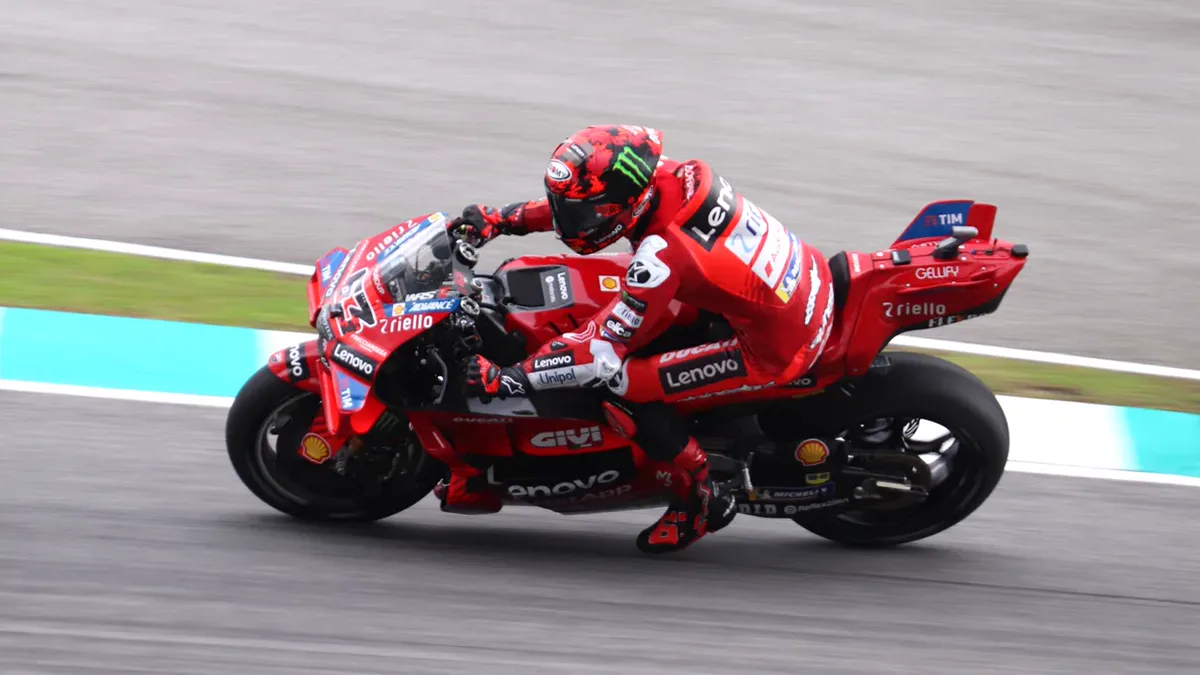
Can teams run asymmetric fairings to counter coastal gales?
Technical regulations strictly prohibit asymmetrical aerodynamic bodies to prevent runaway aerodynamic development wars and extreme stability hazards. FIM rules mandate that all homologated aero bodies must remain perfectly symmetrical along the longitudinal center plane, meaning teams cannot adapt left and right wings independently.
Because the wind generally blows from the south-southwest across Western Port Bay, an asymmetric fairing could theoretically counteract prevailing gusts. However, wind direction fluctuates during spring in Victoria. An asymmetric wing package could turn catastrophic if an ocean squall suddenly reversed direction mid-race.
Instead, manufacturers focus on passive airflow bleed channels and flexible internal ducts. Factory teams design hollow channels inside the carbon fairing sides that allow crosswinds to blow through the bodywork rather than pushing against a solid barrier wall. These clever pass-through vents maintain forward downforce while reducing lateral surface area.
Rider physical conditioning also plays a decisive role throughout twenty-seven laps of relentless exertion. The physical demands of wrestling a prototype through high-speed transitions require immense upper-body endurance. Riders who maintain smooth riding styles avoid over-stressing front tires, leaving critical rubber reserves for the final laps.
Phillip Island MotoGP Aerodynamics FAQ
Why do MotoGP bikes remove aero wings at Phillip Island?
Race direction permits teams to remove outer winglet elements when crosswind gusts exceed 40 km/h. Stripping the front wings reduces lateral surface area, preventing coastal gusts from blowing front tires off line at 340 km/h.
How fast do MotoGP bikes go through Doohan Corner?
Riders enter Doohan Corner (Turn 1) at approximately 340 km/h down Gardner Straight and maintain apex speeds around 210 km/h, making it one of the fastest cornering entries in global motorsport.
What is the FIM aero body homologation rule?
Each MotoGP manufacturer is allowed to homologate only two distinct aerodynamic fairing designs per rider per season. One design update can be introduced during the championship year, but the core silhouette must remain symmetrical.
How does ocean wind affect motorcycle lean angles?
Crosswinds alter the effective relative airflow angle, either assisting bike lean or resisting it. A sudden 50 km/h gust can push a bike five degrees deeper into a turn or stand it upright unexpectedly.
How we researched this: Rhett Calloway evaluated FIM technical regulations, wind tunnel telemetry reports, and rider debriefs from Australian Grand Prix sessions.