The short lap: This Austin GP COTA guide explains how shifting clay subsoil creates severe track bumps and why Formula 1 teams must compromise ride height to survive the FIA 1mm skid block wear limit.
On this page
- Why Does Shifting Clay Soil Create Chronic Bumps at COTA?
- How Does the 1mm Plank Wear Rule Force Ride Height Changes?
- Telemetry Analysis: Turn 1 Braking Compression vs High-G S-Curves
- Austin GP COTA Guide: Essential Setup Compromises and Track Maps
- Paddock Logistics: Turn 1 Hill Spectating vs Infield Shuttles
- Pit wall questions
Why Does Shifting Clay Soil Create Chronic Bumps at COTA?
Circuit of the Americas sits on expansive black gumbo clay that shifts with seasonal weather. Soil moves. When rain saturates Travis County, the subsoil expands significantly. During hot dry summers, the clay shrinks and cracks. This natural ground movement pushes the asphalt foundation upward unevenly across Sector 1 and the back straight. Bumps win.
When track designers built Circuit of the Americas outside Austin, the natural elevation changes provided an exceptional canvas for modern motorsport. It looks great. However, the ground beneath the tarmac presents constant engineering headaches. European tracks like Spa-Francorchamps rest on stable rock. In contrast, COTA rests on soft river basin deposits that never stop moving.
Heavy racing machines accelerate this ground displacement. Heavy stock cars and high-downforce prototypes pound the surface year-round. Asphalt shifts. Between Turns 2 and 10, continuous lateral cornering forces shove the asphalt outward. By autumn, open-wheel ground-effect cars encounter harsh surface ripples that upset sensitive aerodynamic floors. Floor seals break.
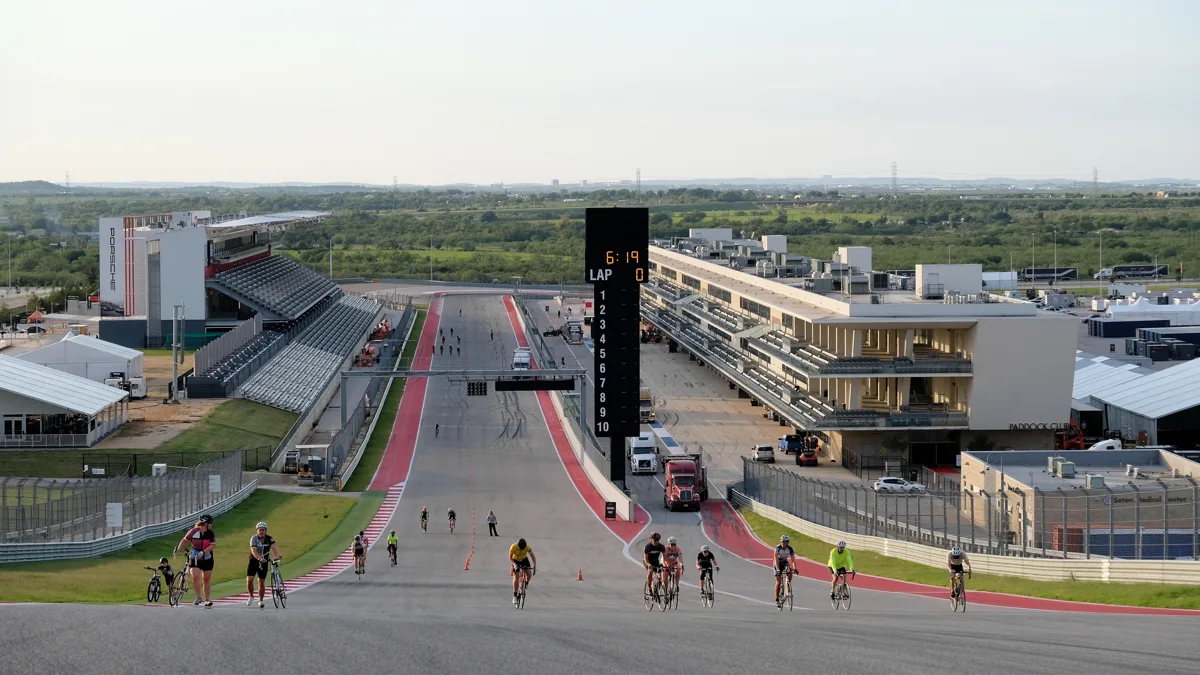
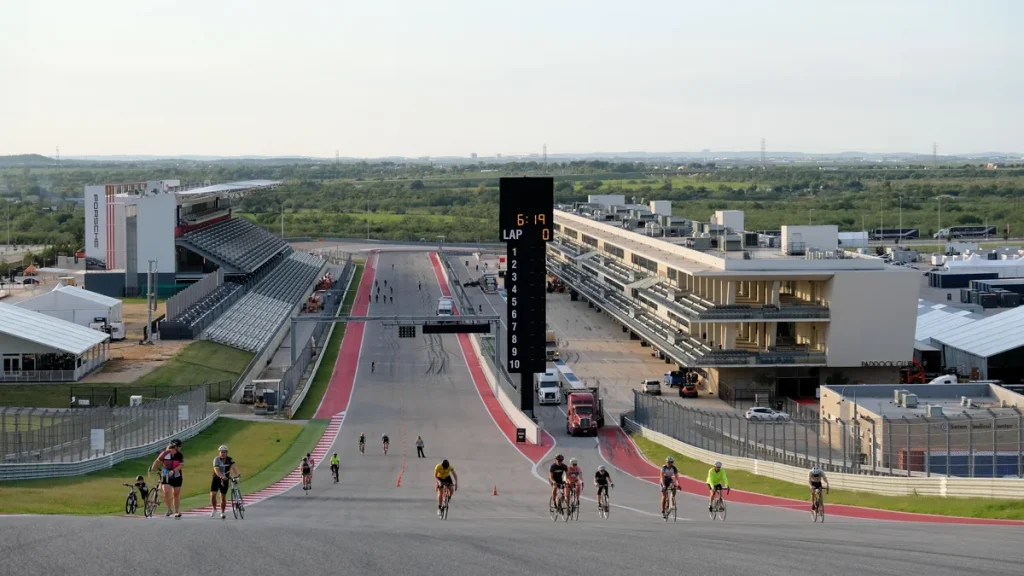
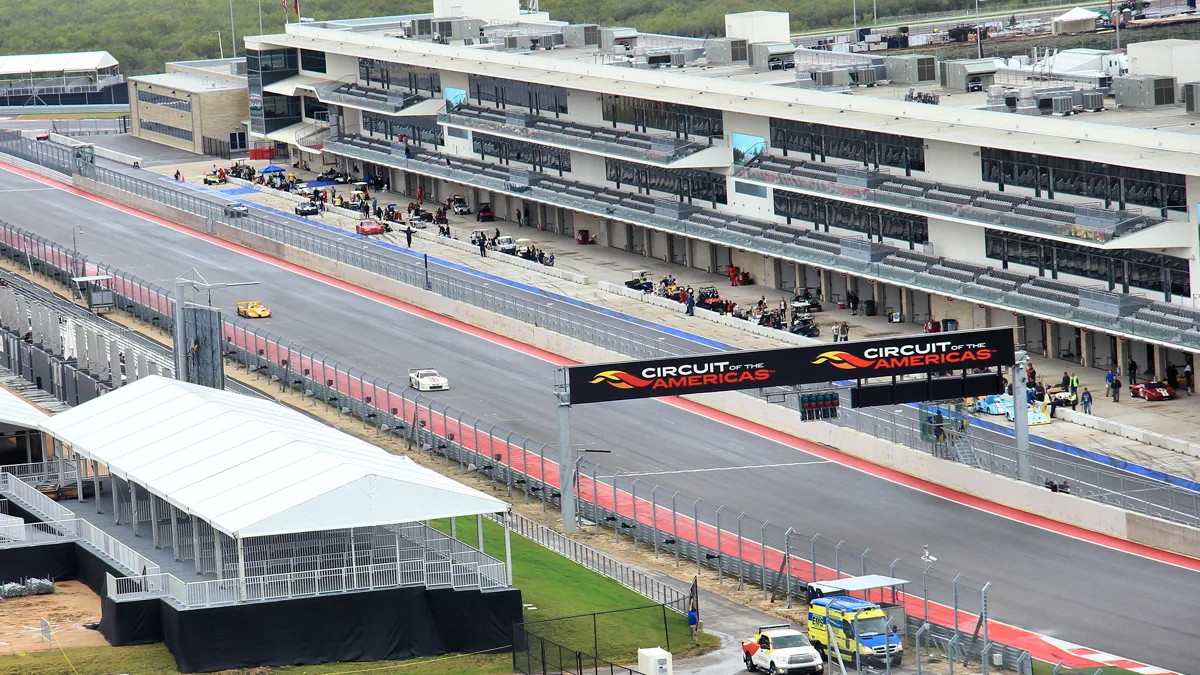
Ahead of the grand prix weekend, track crews conducted targeted diamond-grinding and selective repaving. Operations focused on the uphill approach to Turn 1, the downhill plunge into Turn 2, and the braking zone at Turn 12. Workers removed 40 millimeters of worn surface to lay down a flexible polymer-modified asphalt mix.
For race engineers, fresh asphalt creates immediate setup headaches. The smooth patches offer sharp initial grip, but untreated older segments remain abrasive. Drivers feel abrupt traction changes mid-corner, forcing careful throttle discipline on every qualifying simulation.
How Does the 1mm Plank Wear Rule Force Ride Height Changes?
FIA regulations permit only 1.0mm of wear on the 10mm underbody jabroc skid block. Planks scrape. Bottoming out over Austin ripples quickly scrapes away the wooden plank. Teams must raise static ride height by 2 to 4 millimeters, willingly surrendering downforce to avoid post-race disqualification. Margins vanish.
Modern ground-effect aerodynamics generate downforce through venturi tunnels beneath the sidepods. Tunnels suck. The closer the floor runs to the track, the stronger the suction becomes. In wind tunnels, engineers drop ride height as low as possible. In Austin, running ultra-low all but ensures an illegal plank inspection.
Technical inspectors check four measurement holes after the checkered flag. If a skid block measures thinner than 9.0mm, the car is excluded immediately. Recent disqualifications in Texas proved how unforgiving the rule is when cars strike crests at 320 km/h with heavy fuel loads.
Raising static rear ride height by just 3 millimeters costs roughly 15 points of aerodynamic downforce. That penalty equals nearly three-tenths of a second per lap in high-speed sweeps. Engineers face tough choices:
- Stiffen the mechanical suspension to stop vertical bottoming at the cost of tire compliance.
- Soften vertical bump stops to protect driver physical endurance over 56 brutal laps.
- Raise front wing flap angles to balance high-speed understeer caused by higher floor clearances.
- Sacrifice curb-riding aggression at Turn 9 and Turn 19 to preserve titanium skid blocks.
Sprint race schedules make setup calculations even more dangerous. Teams get a single 60-minute practice session before parc ferme rules lock suspension parameters. Estimating tire degradation and fuel-tank bottoming from three short runs remains a massive engineering challenge.
Telemetry Analysis: Turn 1 Braking Compression vs High-G S-Curves
Turn 1 features an extreme 133-foot uphill climb from the start line. This steep incline creates organic braking assistance, allowing drivers to hit the brakes 15 meters later than on level tarmac before turning into a blind crest.
The main straight climbs over 40 vertical meters before reaching the Turn 1 apex. The uphill slope squashes the front tires firmly into the track surface. This vertical compression boosts braking performance, shortening stopping distances by more than 10 percent.
However, the crest presents an invisible trap. The apex drops away into a blind downhill camber. As the car crests the hill, vertical downforce drops instantly. Front grip vanishes just as the driver turns the wheel. Missing the turn-in point sends the car skating across wide painted curbs.
| Sector and Key Corner | Entry Speed (km/h) | Peak Force Load | Primary Chassis Risk |
|---|---|---|---|
| Turn 1 Crest and Apex | 318 to 88 km/h | -4.9G Longitudinal | Front axle lockup during cresting unweighting. |
| Turns 3 through 6 (Esses) | 275 to 220 km/h | +4.8G Lateral | Right-front tire overheating and floor pitch sensitivity. |
| Turn 11 Hairpin | 295 to 72 km/h | -4.4G Longitudinal | Rear traction loss launching onto the 1.2km straight. |
| Turns 16 through 18 | 230 to 215 km/h | +4.2G Sustained Lateral | Severe left-side shear and continuous tire graining. |
Exiting Turn 1 drops drivers directly into the rapid S-curves from Turn 3 through Turn 6. This complex demands razor-sharp steering inputs. Any high-frequency bounce over surface ripples breaks floor suction, producing violent mid-corner understeer.
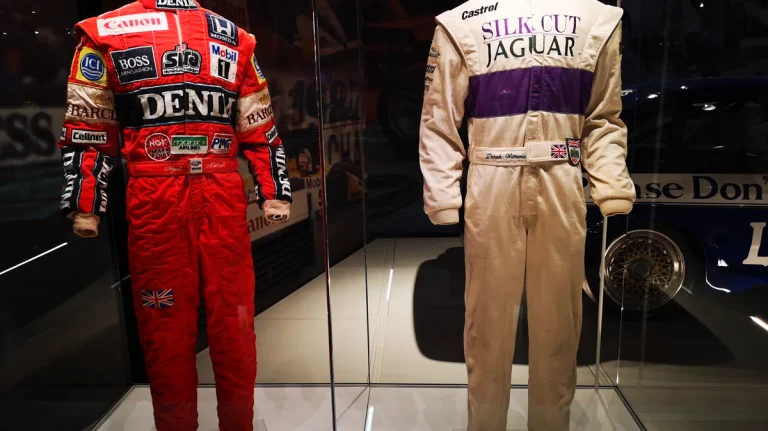
Fans following paddock style projects and garage gear often study these technical challenges. Exploring authentic open-wheel driver styling and durable paddock track layers gives great context to what teams wear while working long hours in the Texas heat.
Austin GP COTA Guide: Essential Setup Compromises and Track Maps
A complete Austin GP COTA guide requires balancing aerodynamic downforce against tire thermal wear and suspension travel. Teams that prioritize mechanical grip through Sector 3 often preserve rear tires better than those chasing top speed down the 1.2-kilometer back straight.
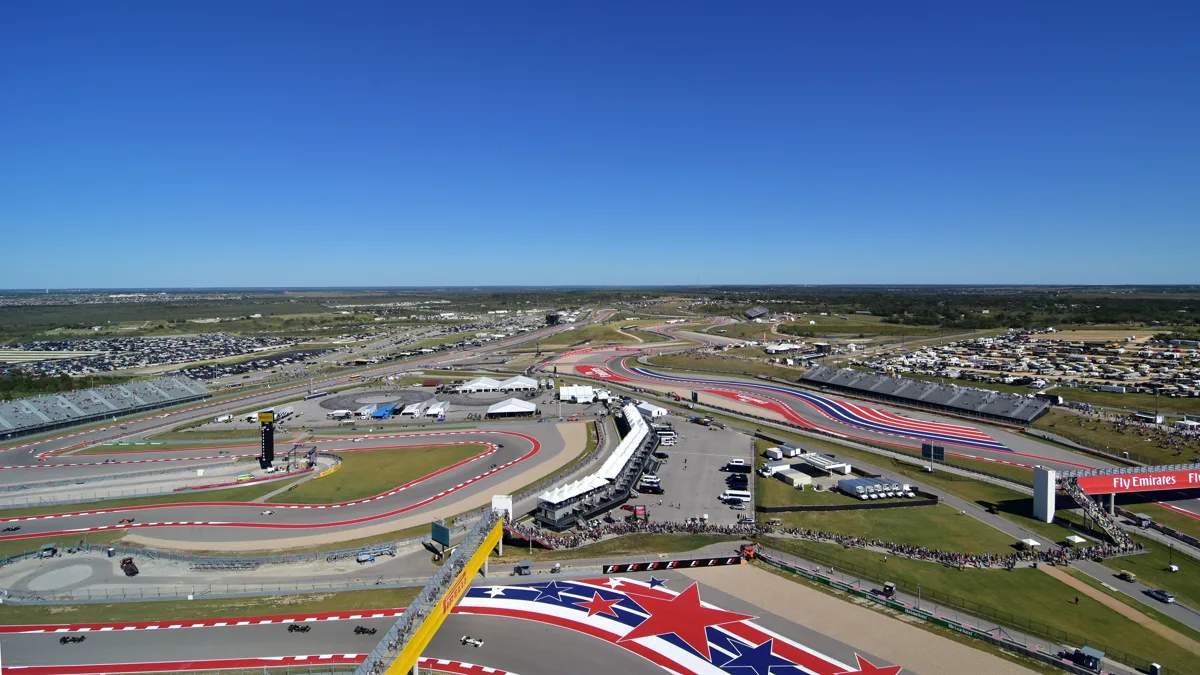
The circuit layout demands three completely different car personalities across its 5.513-kilometer length. Sector 1 calls for maximum aerodynamic stability and instant steering response. Grip changes fast. Sector 2 consists of a tight hairpin followed by a massive full-throttle straight where low drag matters most. Sector 3 resembles a tight stadium arena with long slow-speed radius corners that test mechanical differential tuning. It is slow and narrow.
Setting up the differential is particularly vital for exiting Turn 11. Drivers must put down over 1,000 horsepower smoothly without spinning the rear wheels. Traction decides everything. Excessive wheelspin on corner exit overheats the tire carcass, leaving the driver defenseless against slipstream overtakes halfway down the back straight.
Tire selection also dictates race strategy. Rubber wears hard. Pirelli typically brings middle-range compounds to Austin. High track temperatures combined with abrasive asphalt make a two-stop strategy the standard baseline. Managing high degradation requires gentle steering inputs through the multi-apex Turns 16, 17, and 18. Small slides ruin tires.
Paddock Logistics: Turn 1 Hill Spectating vs Infield Shuttles
Walking between spectator zones at Circuit of the Americas requires serious preparation. The facility covers 1,500 acres of open terrain. Plan early. Fans regularly log over 15,000 steps daily traveling between the Grand Plaza and outer viewing hills. The distances surprise first-timers.
The Turn 1 general admission hill remains one of the finest viewing areas in racing. Spectators seated high on the grassy berm enjoy panoramic views across five track sections. It feels huge. From this vantage point, you watch the race start, the Turn 1 scramble, the downhill rush into Turn 2, and distant battles in the infield complex.
Securing prime spots on the grass requires arriving right as gates open at 7:30 AM on race day. Do not sleep in. Seasoned attendees bring low-profile folding chairs, wide-brim hats, and refillable hydration bottles. Infield shuttles circle the perimeter, but walking through pedestrian bridges is often faster during peak crowd hours. Crowds build quickly.
Texas autumn weather fluctuates rapidly. Mornings start cold. Morning temperatures frequently sit near 55 degrees Fahrenheit (13 degrees Celsius) with river valley fog. By mid-afternoon, clear skies push temperatures above 85 degrees Fahrenheit (30 degrees Celsius). Heat bites back. Layering with lightweight breathable gear ensures all-day comfort trackside.
How we researched this: timings, telemetry, results and regulatory dates come from the official FIA technical directives, Circuit of the Americas track announcements and team debriefs. AI tools helped draft the article; Rhett Calloway reviewed, edited and verified every technical metric against official timing sheets.
Pit wall questions
Why is Circuit of the Americas so bumpy compared to other tracks?
COTA rests on active black gumbo clay soil native to central Texas. This clay expands when saturated with rain and contracts during dry heat waves, causing the ground to shift unevenly beneath the asphalt foundation.
What is the skid block wear rule that caused Austin disqualifications?
FIA Technical Regulation Article 3.5.9 dictates that the underbody jabroc plank must measure 10mm thick with a maximum allowable wear of 1.0mm post-race. Measuring less than 9.0mm triggers automatic technical disqualification.
Where is the best general admission spot to watch at COTA?
The Turn 1 general admission hill provides the best sightlines on the circuit. Fans on the elevated grass lawn can see the main straight, the Turn 1 apex, and sweeping views of Sector 1 Esses.
How much lap time do teams lose by raising ride height at Austin?
Raising static ride height by 2 to 4 millimeters to prevent plank wear typically costs between 0.2 and 0.35 seconds per lap due to decreased underbody ground-effect aerodynamic downforce.
What should fans pack for a race weekend at COTA?
Spectators should bring comfortable walking shoes, high-SPF sunscreen, a wide-brim hat, portable battery packs, and breathable layered clothing to handle morning chills and afternoon sun.