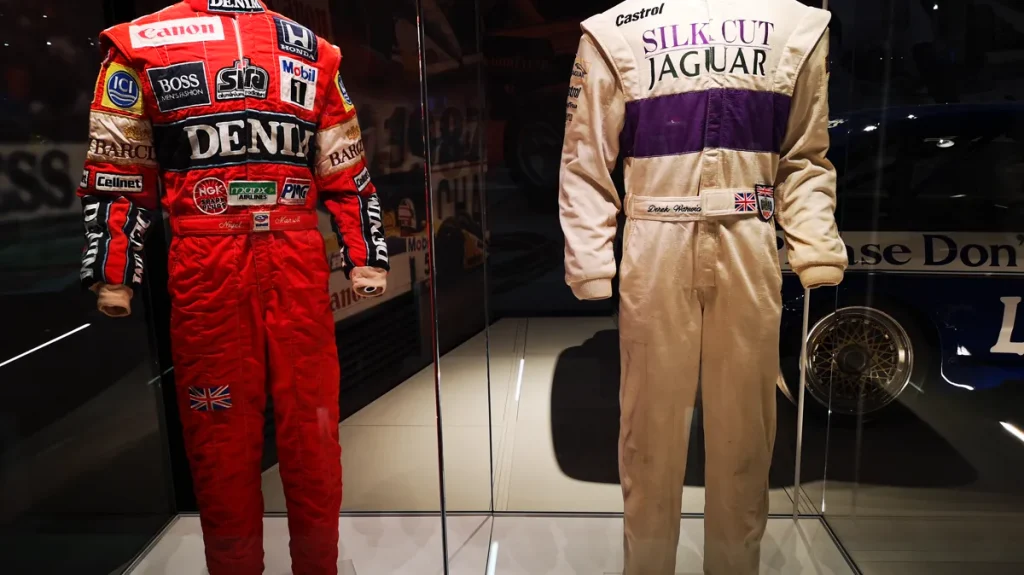
The short lap: Building an authentic f1 costume starts with heavy cotton-poly utility coveralls rather than shiny party-store spandex. Focus sponsor emblems on the upper chest and collar where cockpit cameras look, add shoulder extraction loops, pair with low-profile driving sneakers, and finish with a structured team cap for trackside credibility.
Step onto the starting grid before an open-wheel Grand Prix and you notice one undeniable truth. Race overalls are precision equipment, not novelty pajamas. Yet each Halloween, costume stores stock racks of paper-thin polyester jumpsuits with blurry sublimated logos and floppy collars. If you want a convincing f1 costume that commands respect among racing enthusiasts, you need to understand how real cockpit apparel is designed and why amateur builds fall flat. Look at the paddock construction first.
At Kozmozstore, we analyze motorsport from the pit wall down to telemetry sensors and technical liveries. Driver overalls are engineered around strict cockpit packaging and camera visibility. Whether you want to assemble a sharp formula 1 costume for an October party or build a detailed tribute to your favorite open-wheel racing team, following authentic tailoring rules gives you a durable outfit you can wear across multiple race weekends without overheating.
Why Avoid Cheap Retail Outfits When Building an F1 Costume?
Commercial Halloween outfits fail because mass manufacturers prioritize ultra-low garment weight and cheap single-layer polyester over structural stiffness. Authentic driver overalls use heavy multi-layer aramid twill that drapes with clean vertical lines, while budget party suits cling awkwardly and develop static electricity within minutes.
When you examine an off the shelf f1 driver costume, the structural compromises are obvious. Retail costumes print every single graphic directly into the fabric using low-resolution sublimation. The sponsor badges look flat and cartoonish. The collar lacks the rigid interfacing needed to stand upright around the throat, and the waistline sags because manufacturers omit internal elastic tensioning.
Costume builders who start from real workwear avoid three universal frustrations:
- Embarrassing Seam Tears: Cheap retail jumpsuits use minimal single-thread overlock stitching. Climbing into a car or bending down to tie your shoe frequently splits the seat seam. Industrial coveralls feature reinforced double-needle chain stitching.
- Thermal Misery: Thin unlined polyester traps body perspiration against your skin. A breathable 65/35 poly-cotton workwear twill allows natural air exchange while keeping you warm during brisk autumn evenings.
- Zero Pocket Storage: Authentic driver suits and workwear overalls include functional chest, side, and hip pockets. You can carry your smartphone, cards, and keys comfortably without slinging an out of character backpack over your shoulders.
For a baseline comparison of different build tiers and budget options, consult our comprehensive paddock driver costume build guide where we break down entry-level versus advanced utility conversions.
What Are the Visual Anatomy Zones of an Open-Wheel Driver Suit?
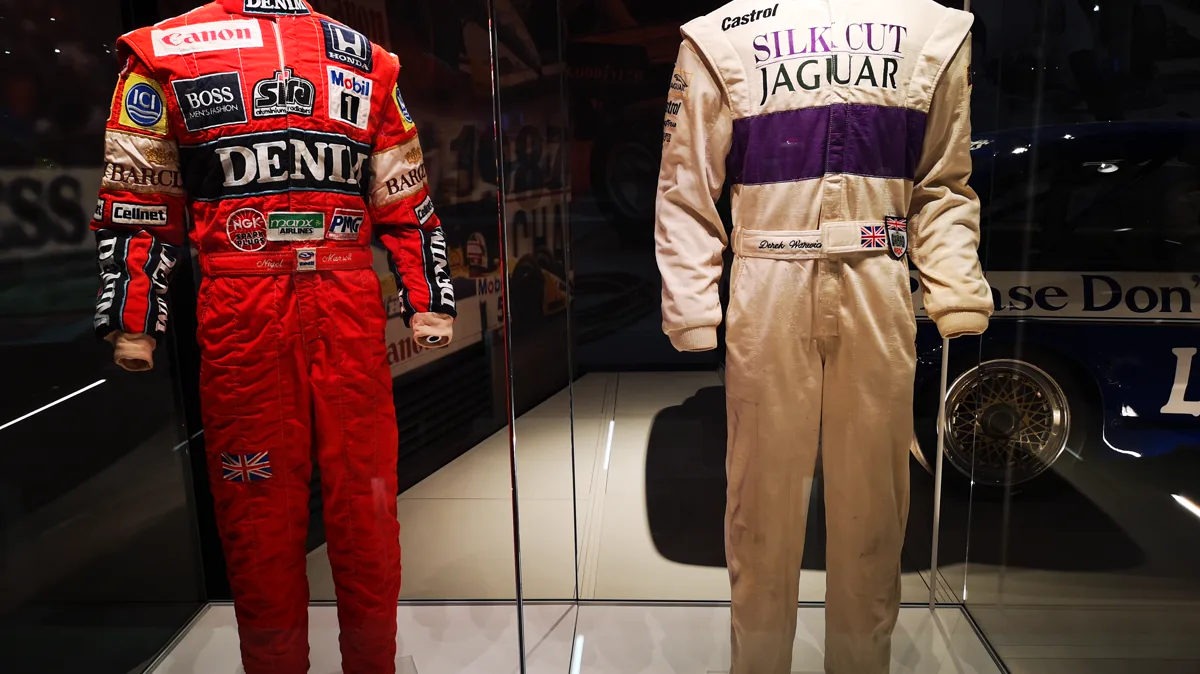
Grand Prix racing overalls are designed specifically around the cockpit camera view, concentrating high-contrast sponsor emblems on the clavicles, upper chest, and shoulder epaulets. Understanding these placement zones lets you position patches exactly where genuine racing teams place technical partner crests.
In modern open-wheel race cars, the composite safety cell encloses the driver up to mid-torso. Broadcasters position high-definition onboard cameras on the roll hoop above the air intake. Because the driver’s lower torso is hidden inside the monocoque, teams position primary sponsors in prime camera sightlines:
- The Throat Collar Band: A stiff, stand-up mandarin collar with a Velcro tab closure. Real drivers wear their surname, national flag, and blood type embroidered along the side edge of this band.
- Shoulder Extraction Epaulets: Thick fabric straps stitched across the top of both shoulders. In real competition, track marshals use these reinforced handles to extract a driver safely. Adding 1.5-inch webbing straps here is the single fastest way to make a DIY build look authentic.
- Upper Clavicle Zones: The dual rectangular panels sitting directly below the collarbone. This area is reserved for watchmakers, engine technical partners, and fuel suppliers.
- Center Chest Chevron: The primary title sponsor space running across the upper breast line. Keep this area bold, centered, and horizontally level.
- Sleeve Bicep Ladders: Vertical stacks of three to four smaller technical supplier badges running down the outside of the upper sleeves.
Pit note: Never crowd the stomach or groin with large patches. Leaving the lower abdominal panel clean preserves natural cockpit proportions and keeps your outfit looking like a driver suit rather than a mechanic apron.
How to Select Utility Coveralls for an Open-Wheel Project
Selecting the right base garment is the foundation of any successful DIY project. High-quality zip-front utility coveralls made from 7.25-ounce poly-cotton twill provide the exact fabric weight, drape, and hardware needed to mimic modern open-wheel overalls.
In community build threads documented on costume maker discussions on Reddit, experienced creators consistently recommend starting with clean navy, white, black, or red industrial boiler suits. Look for garments with a covered brass zipper fly so metal teeth do not disrupt your chest graphics.
Follow these practical preparation steps before attaching any graphics:
- Pre-Wash Without Fabric Softener: Machine wash your coveralls in warm water and tumble dry thoroughly. Washing removes sizing chemicals that prevent heat-transfer adhesives from gripping the fibers. Avoid liquid softeners, which leave a silicone film that weakens glue bonds.
- Iron the Torso Flat: Press the chest, collar, and shoulder seams using steam to create a smooth, wrinkle-free foundation for graphic alignment.
- Fit the Waistline: If the suit feels boxy around the lower back, stitch an 8-inch strip of 1-inch elastic across the inside rear waistband. For detailed tailoring tips, check our tailored utility jumpsuit checklist to streamline your proportions.
Which Team-Inspired Color Schemes and Patch Layouts Look Best?
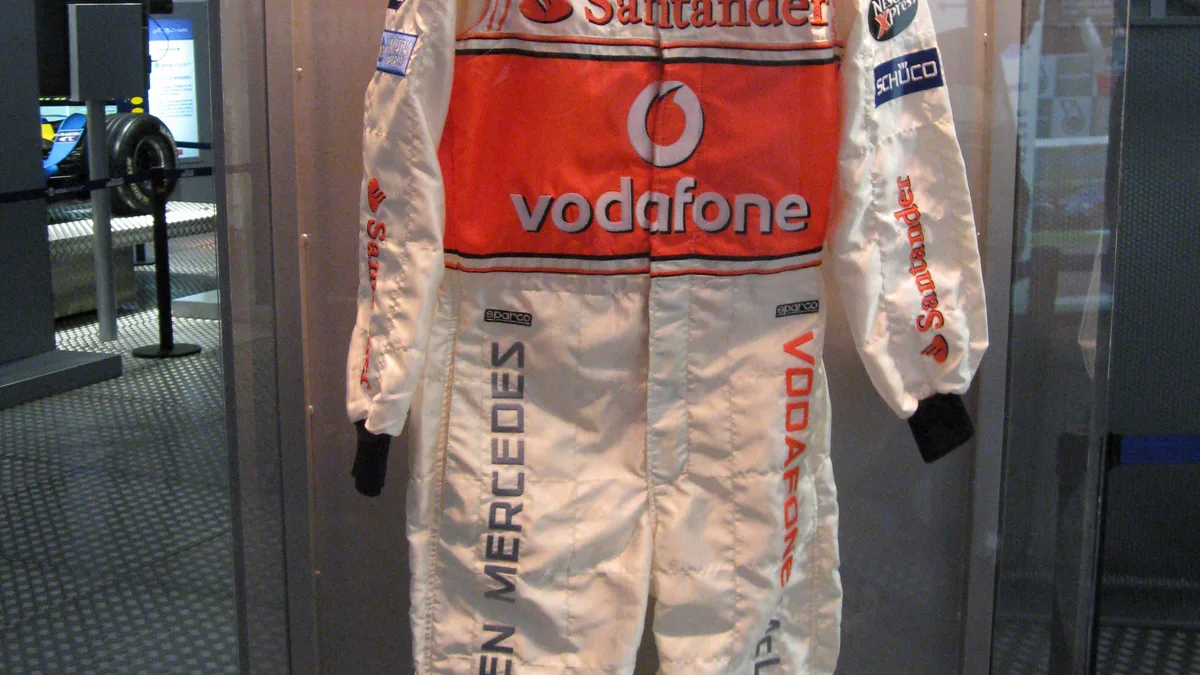
Using cohesive team-inspired color combinations creates an unmistakable Grand Prix paddock profile without infringing on protected team trademarks. Combining clean base garment colors with contrasting racing stripes produces a sharp team motorsport appearance.
You can select one of these four proven paddock color stories to anchor your f1 race suit costume:
| Team Inspiration | Base Coverall Color | Accent Stripe Colors | Emblem Style |
|---|---|---|---|
| Silverstone Heritage | Racing Green | Neon Volt Yellow & Black | High-contrast technical logos, wing crests, engineering text |
| Woking Aerodynamics | Papaya Orange | Anthracite Grey & Cyan | Minimalist geometric chevrons, speed swishes, tech partners |
| Maranello Passion | Scarlet Red | Crisp White & Bright Yellow | Shield badges, Italian tricolor bars, vintage oil emblems |
| Milton Precision | Midnight Navy | Sunburst Yellow & Royal Red | Bold diagonal stripes, charging silhouettes, energy crests |
When applying striping, run two-inch wide grosgrain ribbon down the outer sleeve seams from shoulder to wrist cuff, and down the outer trouser leg seams. Sewing the ribbon with a simple straight stitch or using high-strength fusible webbing produces factory-level crispness.
How to Iron On Graphics and Embroidered Badges Without Scorching Fabric
Attaching sponsor graphics requires careful temperature control and even pressure to ensure patches adhere smoothly without scorching the underlying polyester-cotton fabric. Combining printable heat-transfer vinyl with traditional embroidered patches delivers the sharpest visual depth.
Follow this tested application procedure when decorating your diy f1 costume:
- Test Fabric Heat Tolerance: Set your household iron to the wool or cotton blend setting (approximately 305°F to 315°F). Press an inconspicuous interior hem for 15 seconds to ensure the textile does not glaze or melt.
- Position with Tailor Chalk: Put on the jumpsuit and mark your collarbone line, chest center, and shoulder seams with chalk while standing before a mirror. Real suits align patches relative to the wearer’s anatomy, not the flat table seams.
- Use Parchment Barriers: Always place clean silicone parchment paper between your iron and the patch or vinyl carrier sheet. This distributes heat evenly and shields synthetic threads from direct iron contact.
- Apply Firm Vertical Pressure: Press downward firmly for 20 to 25 seconds without sliding the iron back and forth. Sliding can shift the hot adhesive and create blurry borders.
- Reinforce High-Stress Corners: For thick embroidered crests on sleeves and chest pockets, hand-stitch three small anchor points through the corners with matching thread. This prevents corner peeling when moving through crowds.
What Accessories Complete the Paddock Style?
Grand Prix drivers spend most of their race weekends out of the cockpit, wearing structured team headwear, slim driving sneakers, and sponsor sunglasses. Pairing your custom overalls with clean paddock accessories elevates a DIY project into a complete, professional motorsport persona.
In driver paddock archives documented by Formula 1 technical insights, team equipment managers emphasize that comfort drives trackside footwear choices. Drivers switch out of narrow fireproof boots into streamlined athletic trainers the moment they step out of the car. Low-profile black or white driving sneakers with thin rubber soles complete the race day silhouette perfectly.
To finish your paddock setup, focus on these three authentic accessories:
- Structured Team Headwear: Skip clumsy plastic helmets that overheat indoors. Finish your look with custom racing team caps featuring clean curved bills, structured crown panels, and contrast sandwich trims that match your jumpsuit stripe colors.
- High-Cuff Driving Gloves: Slip lightweight gauntlet gloves through your belt or carry them in your back pocket. Gloves with external seam stitching and suede grip palms add immediate technical credibility.
- Paddock Pass Lanyard: Wear a wide neck lanyard holding a custom race paddock credential badge in a clear plastic sleeve. It creates an authentic insider presence that draws immediate compliments.
How we researched this: At Kozmozstore, we analyzed technical paddock regulations, reviewed community maker builds across Reddit r/Halloween_Costumes, and cross-referenced team livery photography from active Grand Prix seasons to establish authentic, accessible build methods.
Pit wall questions
How much does it cost to build a DIY F1 costume?
Assembling a high-quality open-wheel driver costume from poly-cotton coveralls typically costs between $65 and $95. This includes $35 for durable utility coveralls, $15 for accent striping ribbon, $20 for custom embroidered badges or printable heat-transfer vinyl, and $15 for headwear accessories.
Should I wear a helmet with my F1 costume?
A full-face racing helmet is heavy, severely restricts vision, and makes socializing at Halloween parties difficult. Real Grand Prix drivers spend almost all their pre-race and media time in team sponsor caps. A structured team baseball cap provides authentic trackside style with all-night comfort.
Can I wash my costume after applying heat-transfer patches?
Yes. Wait at least 48 hours after heat application before washing. Turn the coveralls inside out and wash in cold water on a gentle cycle, then hang to air dry. Avoiding high dryer heat protects the adhesive backing and keeps embroidered threads crisp.
What footwear pairs best with open-wheel driver overalls?
Pair your jumpsuit with slim low-profile sneakers, minimalist suede driving trainers, or classic canvas low-tops in black or white. Avoid chunky running shoes, hiking boots, or casual sandals, which break the aerodynamic silhouette of the driver suit.

Pingback: Race Car Driver Costume: 3 DIY Tiers & Paddock Guide