The short lap: F1 cockpit heat cooling is a critical safety system engineered to counter 55°C cabin temperatures at extreme humidity races like Singapore. Teams route external air through nosecone NACA ducts, passive headrest vents, and micro-chillers to protect driver cognitive performance under brutal physical loads.
Night falls over Marina Bay. Track temperatures stay stubbornly above 35°C. Relative humidity frequently exceeds 80 percent across sixty-one punishing laps. Cocooned inside a tight carbon monocoque, a grand prix driver faces a punishing micro-climate where ambient engine heat and minimal airflow create an unbearable mobile sauna.

Why is f1 cockpit heat cooling critical at the Singapore Grand Prix?
Singapore Grand Prix cabin temperatures regularly cross 55°C while drivers wear multiple Nomex fireproof layers inside a sealed survival cell. Without dedicated air channels, core body temperatures spike above 39°C. This extreme thermal strain induces rapid dehydration, blurred vision, and split-second cognitive delay when braking at 300 km/h.
Racing drivers lose up to four kilograms of fluids during two hours of relentless street circuit combat. Heat is relentless. Unlike high-speed layouts such as Monza or Silverstone, Marina Bay features nineteen corners connected by short straights. Top speeds are lower. Stagnant air pools around the monocoque rather than sweeping heat away.
The human body cools through sweat evaporation. In extreme humidity, sweat cannot evaporate through Nomex underwear and outer suits. Trapped heat elevates heart rates near 170 beats per minute. Without ventilation, physical collapse becomes an operational hazard.
The FIA official regulations intervened following several extreme weather races. Technical directives now mandate minimum cooling apertures and allow active cooling kits when the wet-bulb globe temperature index crosses 30.5°C. For modern aerodynamicists, driver survival is no longer separate from chassis development.
How hot does a Formula 1 cockpit actually get during night races?
Cockpit sensors consistently record ambient air temperatures between 50°C and 60°C near the driver seat and pedal box. Thermal radiation transfers directly from the front brake ducts, steering rack electronics, hybrid battery housing, and exhaust plumbing mounted just millimeters behind the carbon fuel cell bulkhead.
Every component in a contemporary turbo-hybrid car generates intense thermal energy. The internal combustion engine and turbocharger run at blistering operating parameters. While thermal heat shields line the composite chassis, heat soak is unavoidable during prolonged low-speed cornering sequences. Cabin temperatures climb lap after lap.
| Component / Area | Operating Temperature | Driver Exposure Mechanism | Cooling Intervention |
|---|---|---|---|
| Footwell & Pedal Box | 45°C – 58°C | Hydraulic lines and front brake duct radiant bleed | Nosecone NACA duct feeding floor channel |
| Seat Shell Backing | 52°C – 62°C | Proximity to battery pack and power unit bulkhead | Aerogel thermal barrier and gold leaf insulation |
| Helmet & Visor Area | 48°C – 55°C | Heat wash off front suspension and halo fairing | Top-of-chassis scoop and visor vent slit |
| Steering Column Cavity | 40°C – 50°C | Digital display processor and power steering pump | Internal steering tube airflow bleed |
Radiant heat bleeds upward through the footwell floor. Drivers often report boiling sensations on the soles of their driving boots. Without continuous forward momentum, natural convection ceases completely. Safety car periods amplify cockpit heat soak and test f1 cockpit heat cooling efficiency because vehicle speed drops while engine cooling radiators starve for air.
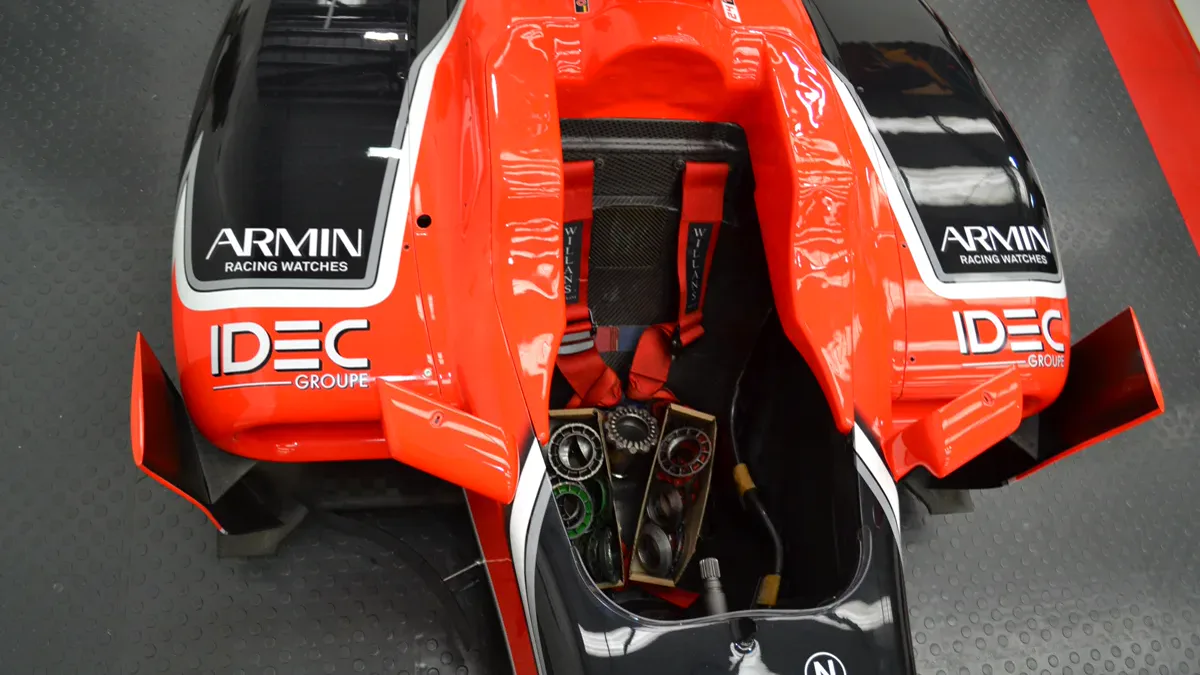
What passive ducts and nose vents route airflow to the driver?
Modern cars rely on passive nosecone scoops, halo-mounted air deflectors, and chassis pass-through ports to funnel fresh air into the monocoque. Engineers place small NACA ducts on the nose tip that direct high-pressure laminar air directly toward the pedal box, washing cool air across the driver legs and torso.
Aerodynamic efficiency dictates every square millimeter of surface bodywork. Opening large holes in the front of a racing car introduces aerodynamic drag and disturbs vortex generation along the underfloor venturi tunnels. Teams must balance aero penalties against human endurance limits. Compromise is constant for f1 cockpit heat cooling.
Chassis designers deploy targeted solutions to balance drag and cooling:
- Nosecone NACA Inlets: Low-drag triangular inlets cut into the top crash structure funnel clean air through carbon ducts toward driver ankles.
- Halo Deflectors: Tiny composite vanes mounted on the titanium halo ring capture clean boundary-layer air and turn it downward toward the driver chest.
- Driver Cooling Seat Inserts: Specialized medical fluid channels woven into the custom foam seat insert circulate chilled water from a dry-ice reservoir.
- Visor Micro-Ventilation: Helmet manufacturers mold small intake ports into the chin bar, directing fresh filtered air across the visor interior to prevent fogging and cool facial tissue.
During extreme heat sessions, regulations permit teams to install auxiliary cooling scoops atop the monocoque vanity panel. These dedicated apertures bypass delicate front-wing aerodynamic structures. They feed air straight into the survival cell without degrading front axle downforce.
How do drivers physically train and manage Singapore thermal exhaustion?
Athletes prepare for Singapore months in advance using environmental heat chambers, intensive sauna acclimation, and deliberate indoor cycling workouts in heavy clothing. This training expands total blood plasma volume, lowers resting core temperature, and accelerates the natural onset of sweating to withstand 60 laps of thermal exposure.
Preparation begins long before arriving in Southeast Asia. Drivers build physiological heat tolerance through progressive heat chamber intervals. Cardiovascular systems adapt by pumping more blood toward the skin surface. Sweat sodium concentration decreases, preserving vital electrolytes during prolonged exertion.
Trackside recovery protocols are equally rigorous throughout the race weekend. Immediately after climbing out of the car, drivers immerse themselves in ice baths to halt core temperature rise. Hydration regimens require consuming measured electrolyte solutions with precise sodium-to-glucose ratios.
Heat management extends beyond the driver monocoque into the garage and paddock. Mechanics and engineering crews endure identical ambient conditions while handling burning wheels and carbon brake components. When off-track drivers and trackside crew transition out of fireproof layers, airflow-engineered garments like breathable racing tracksuits help restore normal core body temperature during humid paddock operations.
Following the Singapore street battle, teams pack their freight boxes for high-speed circuits across the Atlantic. Managing thermal limits remains vital as the championship heads to the United States Grand Prix, detailed in our Texas track breakdown covering elevation and ride height telemetry. Street circuit survival proves that human stamina remains just as decisive as horsepower.
Singapore Grand Prix Cockpit Cooling Technical FAQ
Can Formula 1 cars carry active air conditioning units?
Traditional air conditioning compressors are too heavy and power-hungry for grand prix single-seaters. Instead, the FIA approved micro-chilling systems that circulate cooled fluid through driver undergarments or lightweight peltier-effect thermal heat exchangers weighing under three kilograms.
How much water do drivers drink during the Singapore Grand Prix?
Cars are fitted with a fluid bag holding between 1.0 and 1.5 liters of electrolyte solution. Because the fluid pouch sits adjacent to hot electronics inside the monocoque, the drink quickly reaches 45°C, making hydration feel like swallowing hot tea at racing speed.
What temperature triggers the FIA extreme heat protocol?
When the ambient wet-bulb globe temperature exceeds 30.5°C during an official session, race control declares an extreme heat hazard. This authorization permits teams to install supplementary cooling scoops and increases the minimum weight allowance for certified driver cooling gear.
Why do drivers lose up to four kilograms of weight in Singapore?
Extreme cabin heat combined with eighty percent relative humidity forces the sweat glands into overdrive. Drivers lose between three and four kilograms of fluid weight through continuous sweating during the two-hour time limit race at Marina Bay.
How we researched this: Rhett Calloway reviewed technical directives from the FIA World Motor Sport Council, telemetry logs from Marina Bay sessions, and driver biometrics to document cockpit thermal thresholds.