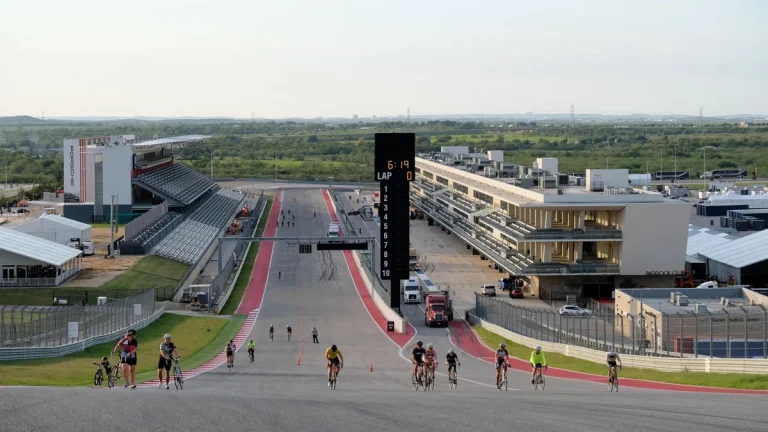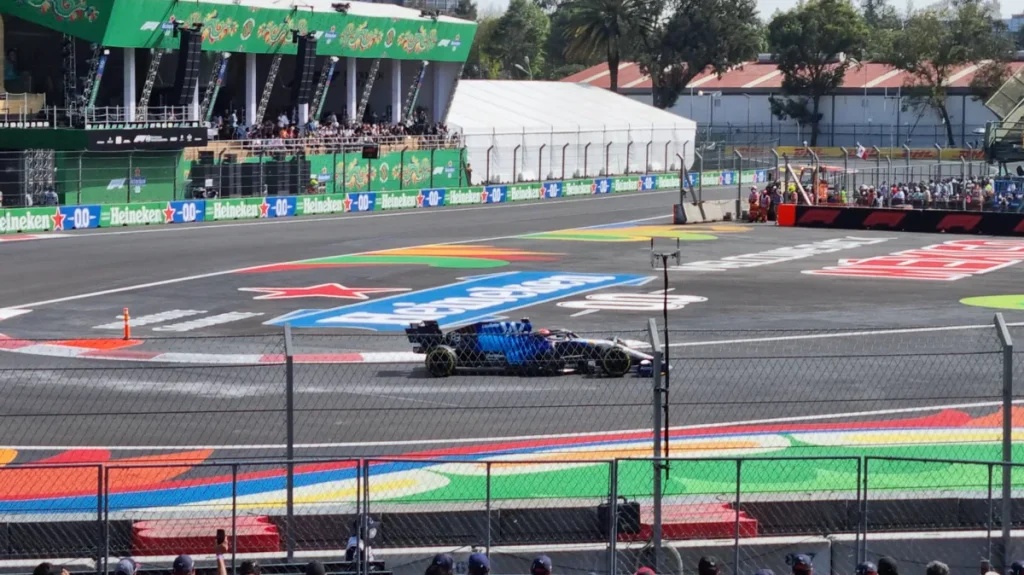
The short lap: Racing at F1 Mexico City high altitude means operating in 22 percent thinner air at 2,240 meters above sea level. Turbochargers spin up to 125,000 RPM to maintain combustion pressure while Monaco-spec wings generate Monza-level downforce, pushing top speeds past 350 km/h down the main straight.
Autodromo Hermanos Rodriguez sits perched over 7,300 feet above the Gulf of Mexico. Atmospheric density drops precipitously compared to sea level. At this extreme elevation, the laws of aerodynamics and power unit thermodynamics become completely distorted, transforming the Mexican Grand Prix into the most extreme technical puzzle of the season.
Why does f1 mexico city high altitude transform car performance?
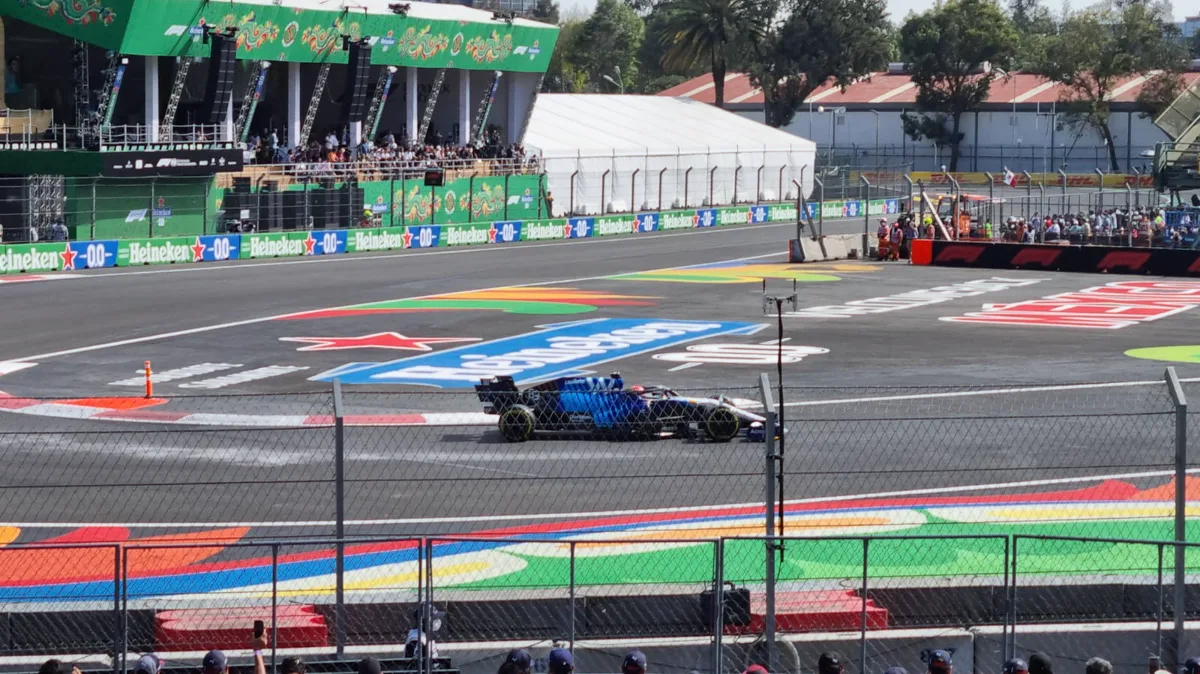
Air pressure in Mexico City measures roughly 780 millibars compared to 1,013 millibars at standard sea level circuits. Thinner air contains twenty-two percent fewer oxygen molecules per cubic meter. This atmospheric starvation reduces natural aerodynamic resistance, cuts cornering downforce, and severely degrades cooling airflow across radiators and brake calipers.
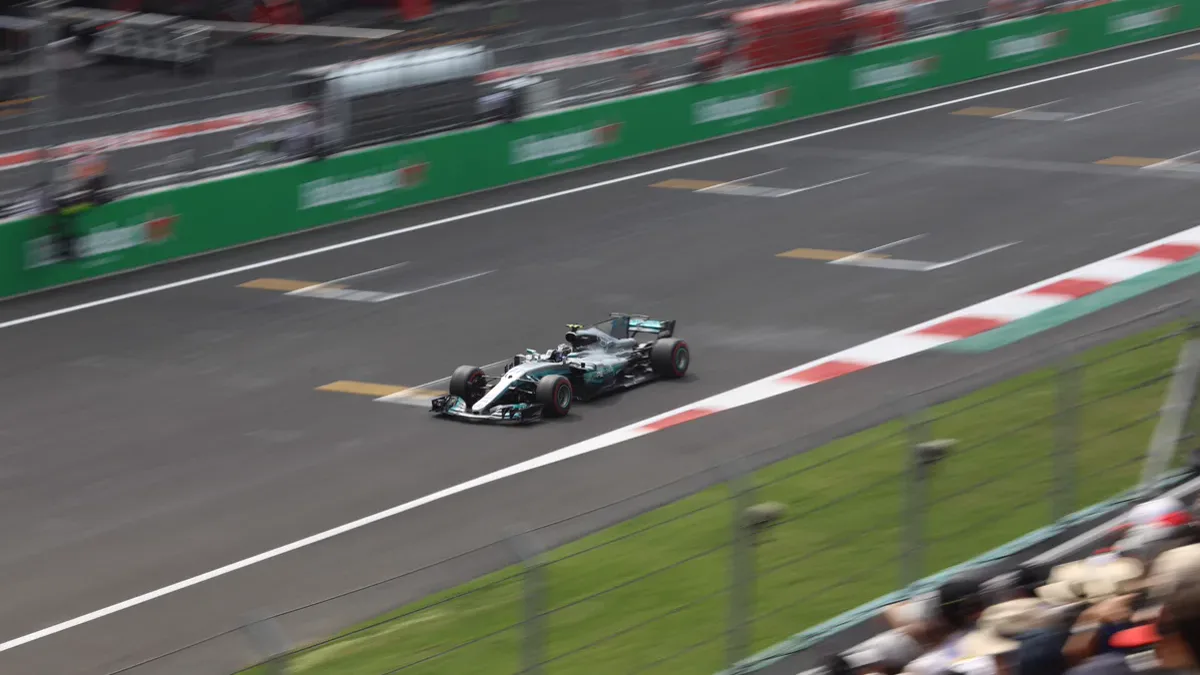
The thin atmosphere creates an astonishing paradox on track. Cars run maximum high-downforce aerodynamic packages with steep wing angles identical to those used in the tight streets of Monaco. Yet because fewer air molecules strike the carbon surfaces, cars produce minimal aerodynamic drag. On the 1.2-kilometer main straight, top speeds routinely exceed 350 km/h.
Aerodynamic efficiency drops across every exterior surface. Front wing flaps cannot direct air cleanly around front tires. The underfloor venturi tunnels generate significantly less ground-effect suction. Drivers describe the feeling as sliding across ice, fighting low grip through high-speed sweeps despite carrying enormous carbon wings.
Data recorded by formula1.com reveals that braking points must be moved earlier despite the low downforce levels. Stopping a car from 355 km/h with reduced aero assistance demands immense pedal effort and flawless brake temperature control before entering the Turn 1 chicane.
How do turbochargers spin faster to compensate for thin air?
To pack enough oxygen into the 1.6-liter V6 combustion chamber, the turbocharger compressor must spin significantly faster than at sea-level venues. Power units run close to the mandatory 125,000 RPM turbocharger shaft speed ceiling. This rotational speed forces the Motor Generator Unit Heat (MGU-H) to operate under extreme electrical and thermal stress.
Modern hybrid power units are less prone to horsepower loss than vintage naturally aspirated engines, which lost over twenty percent of their output at high elevations. Turbochargers compensate by increasing boost pressure. However, compressing thin ambient air raises internal charge temperatures, testing intercooler heat exchanger limits.
| Atmospheric Parameter | Sea Level Baseline (Monza / Silverstone) | Mexico City (2,240m Elevation) | Performance Variance | Engineering Impact |
|---|---|---|---|---|
| Atmospheric Pressure | 1,013 hPa | 780 hPa | -23% Density | Massive drop in air mass across wings and radiators |
| Turbo Shaft Speed | 100,000 – 108,000 RPM | 118,000 – 124,500 RPM | +15% Higher Spin | Compressor runs near structural burst limits |
| Aerodynamic Drag | Baseline High Drag | Down by 22% – 25% | Monza-level drag | Extreme top speeds exceeding 350 km/h |
| Brake Duct Air Mass | 100% Cooling Flow | 78% Effective Mass | -22% Heat Dissipation | Brake calipers and carbon discs overheat rapidly |
Engineers must carefully manage turbo shaft reliability throughout the race distance. If a compressor wheel over-spins, structural failure or turbine blade fatigue occurs instantly. Power unit mappings limit boost during early laps to protect critical hybrid components from thermal degradation.
Why do teams run Monaco wings to produce Monza downforce?
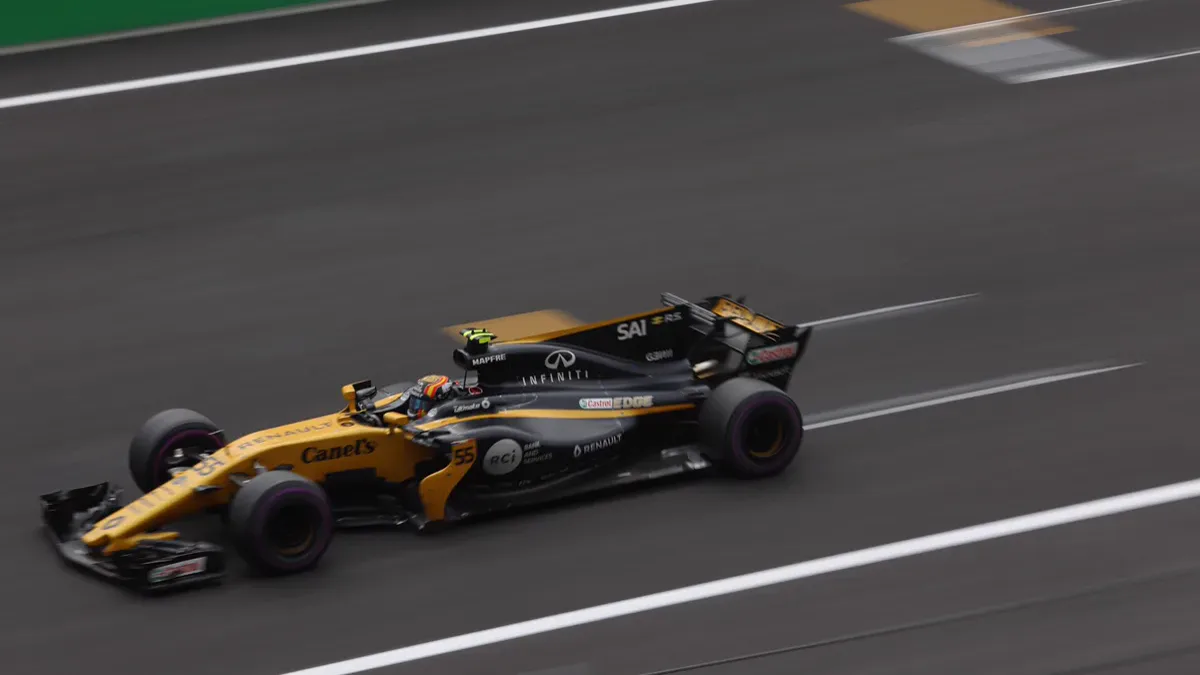
Aerodynamic downforce is directly proportional to air density. Because the ambient atmosphere is twenty-three percent less dense, a full-downforce wing generates roughly the same physical downforce as an ultra-low downforce Monza wing. Teams bolt on maximum chord wings simply to achieve baseline cornering stability.
Every team brings its largest aerodynamic configurations to Autodromo Hermanos Rodriguez. Rear wings feature deep main planes and giant DRS flaps set at aggressive attack angles. Gurney flaps line the trailing edges to extract every ounce of lateral grip through the flowing middle sector.
The aerodynamic penalties and setup balances include distinct trade-offs:
- Main Straight Velocity: Minimal aerodynamic drag allows cars to reach staggering speeds without stripping wing area.
- Esses Directional Changes: High-speed turns through the esses feel unstable because thin air provides less downforce damping to stabilize the chassis.
- Foro Sol Stadium Section: Slow 60 km/h hairpins through the baseball stadium require mechanical suspension compliance rather than aero grip.
- DRS Overtaking Impact: Opening the drag reduction flap provides a smaller speed delta because overall baseline drag is already drastically reduced.
Balancing high straight-line speeds with downforce requirements follows principles seen across high-speed venues, detailed in our opening leg technical breakdown. Mexico City demonstrates how atmospheric physics reshapes competitive hierarchies.
How do mechanics solve severe brake and engine cooling deficits?
Because fewer air molecules enter cooling inlets, heat transfer slows down drastically across liquid radiators, hybrid electrical coolers, and brake discs. Teams slice open enlarged cooling louvers along the engine sidepod bodywork and fit oversized front brake ducts to prevent catastrophic component overheating.
Brake management is notoriously difficult. Approaching Turn 1 after the long straight, carbon discs heat from 400°C to over 1,100°C in less than two seconds. Without dense air flowing through the internal ventilation drillings, the brakes retain residual heat. Caliper seals can cook, causing long brake pedal travel and fluid vaporization.
Bodywork cooling gills look extreme on the grid. Teams cut jagged cooling gills into the engine cover, resembling shark gills. These vents vent scorching air away from the internal combustion engine and hybrid battery pack. Although these openings disrupt aerodynamic efficiency, keeping internal electronics alive takes priority over minor downforce losses.
Drivers must practice extensive lift-and-coast driving during the grand prix. Lifting off the throttle fifty meters before braking points allows cool air to wash through the brake assemblies before full pedal pressure is applied. Clean air management dictates which teams survive the seventy-one lap distance.
Mexico City Grand Prix High Altitude FAQ
Why do F1 cars reach high speeds at Mexico City?
Air density is 22 percent lower at 2,240 meters elevation. This thinner atmosphere generates far less aerodynamic drag, allowing cars equipped with large rear wings to reach top speeds exceeding 350 km/h down the 1.2-kilometer main straight.
Do turbo hybrid engines lose horsepower at high altitude?
Modern turbochargers compensate for thin air by spinning up to 125,000 RPM, compressing air to maintain power. As a result, hybrid power units lose only two to four percent of total power compared to 20 percent losses suffered by older naturally aspirated engines.
Why is brake cooling so difficult at Autodromo Hermanos Rodriguez?
Thinner air contains fewer molecules to absorb heat as it passes through brake cooling ducts. Discs easily exceed 1,000°C during heavy deceleration, requiring oversized duct scoops and lift-and-coast driving to manage pad temperatures.
How high is the Mexico City GP circuit above sea level?
Autodromo Hermanos Rodriguez sits at an elevation of 2,240 meters (approximately 7,350 feet) above sea level, making it the highest circuit on the Formula 1 world championship calendar by a wide margin.
How we researched this: Rhett Calloway examined atmospheric telemetry logs from Autodromo Hermanos Rodriguez, power unit turbo shaft speeds, and brake temperature data.