Comparing a high-end sim rig vs daily driver setup reveals why your street commuter feels sluggish, unresponsive, and surprisingly uncomfortable after a long day behind the wheel.
Anyone who spends an evening logging qualifying laps around Watkins Glen, Road America, or Mount Panorama on an extruded aluminum sim rig knows the visceral sensation. The direct drive motor delivers instantaneous road grain, the load-cell brake pedal demands 70 kilograms of deliberate leg pressure, and the rigid fiberglass bucket locks your hips into surgical alignment.
Then 7:30 AM arrives. You climb into your street car to endure the notorious 45-minute slog down Southern California’s I-405 or the stop-and-go crawl along Austin’s MoPac Expressway. Suddenly, the steering feels numb and detached, the brake pedal feels like stepping into wet dough, and within thirty minutes your lower lumbar starts radiating that dull, throbbing ache. It is the classic sim rig vs daily driver paradox.

Telemetry vs. Street Reality: Why Road Cars Feel Numb
In the debate of sim rig vs daily driver dynamics, your driving frustration is rooted in mechanical design trade-offs. Automotive OEMs purposefully engineer compliance into street cars to mute road noise for casual commuters:
Direct drive wheelbases transmit tire slip immediately, while road car electric power steering (EPS) racks use heavy software damping to smooth out vibrations.
Sim load-cell pedals measure muscular force directly, whereas vacuum-assisted commuter brake boosters prioritize effortless foot travel over tactile modulation.
Sim competition buckets lock your pelvis into place, while road seats use squishy open-cell foam that compresses and sags under prolonged body heat.
The Biomechanical Trap: Why Commuter Seats Destroy Posture
The core physical cause of fatigue when contrasting your sim rig vs daily driver experience is pelvic stabilization. In a race rig, you sit upright with your hips wedged tightly into the crux of the shell. When you smash the brakes into Turn 1, your pelvic bones press directly rearward into the rigid backrest instead of sliding forward.
The Engineering Insight: Posterior Pelvic Tilt & 4-8 Hz Resonance
Standard passenger car seats feature flat cushions that cause your hips to slowly slide forward during braking. This triggers posterior pelvic tilt, collapsing your natural spinal curve into an unnatural C-shape slouch. Your core muscles switch off, dumping your entire upper body weight directly onto the vulnerable L4-L5 spinal discs.
Compounding this strain, highway asphalt transmits constant 4 to 8 Hz vertical vibration—the precise mechanical resonance frequency of the human spinal column. Without rigid bolster support, every concrete highway seam sends micro-shocks straight into tired spinal cartilage.
As motorsport engineers have learned through grueling endurance events, referenced in our coverage of NASCAR street racing innovations, driver fatigue spikes dramatically whenever seat bolsters allow excessive lateral slip.
Bridging the Sim Rig vs Daily Driver Gap: 3 Street Adjustments
You do not need to weld in a racing cage or suffer through an unpadded FIA fiberglass bucket to make your daily commute feel responsive and fatigue-free:
- Set the 100-Degree Upright Angle: Stop leaning back like a lounge chair. Bringing your backrest up to 100–105 degrees presses your shoulder blades flush against the seatback, eliminating shoulder slouch.
- The 120-Degree Pedal Stance: Slide your seat track forward until your knee retains a natural 120-degree bend at maximum brake travel, allowing your heel to serve as a steady mechanical pivot on the floorboard.
- Eliminate Lateral Bolster Slip: In a sim rig, deep side bolsters anchor your torso. On slick factory leather, taking highway ramps causes micro-sliding that triggers painful lower back spasms.
Featured Solutions: High-Traction Bolster Retention
Direct from EzcustomCar: high-elasticity contoured seat protection engineered to eliminate lateral slip on factory seats while preserving airbag deployment channels.
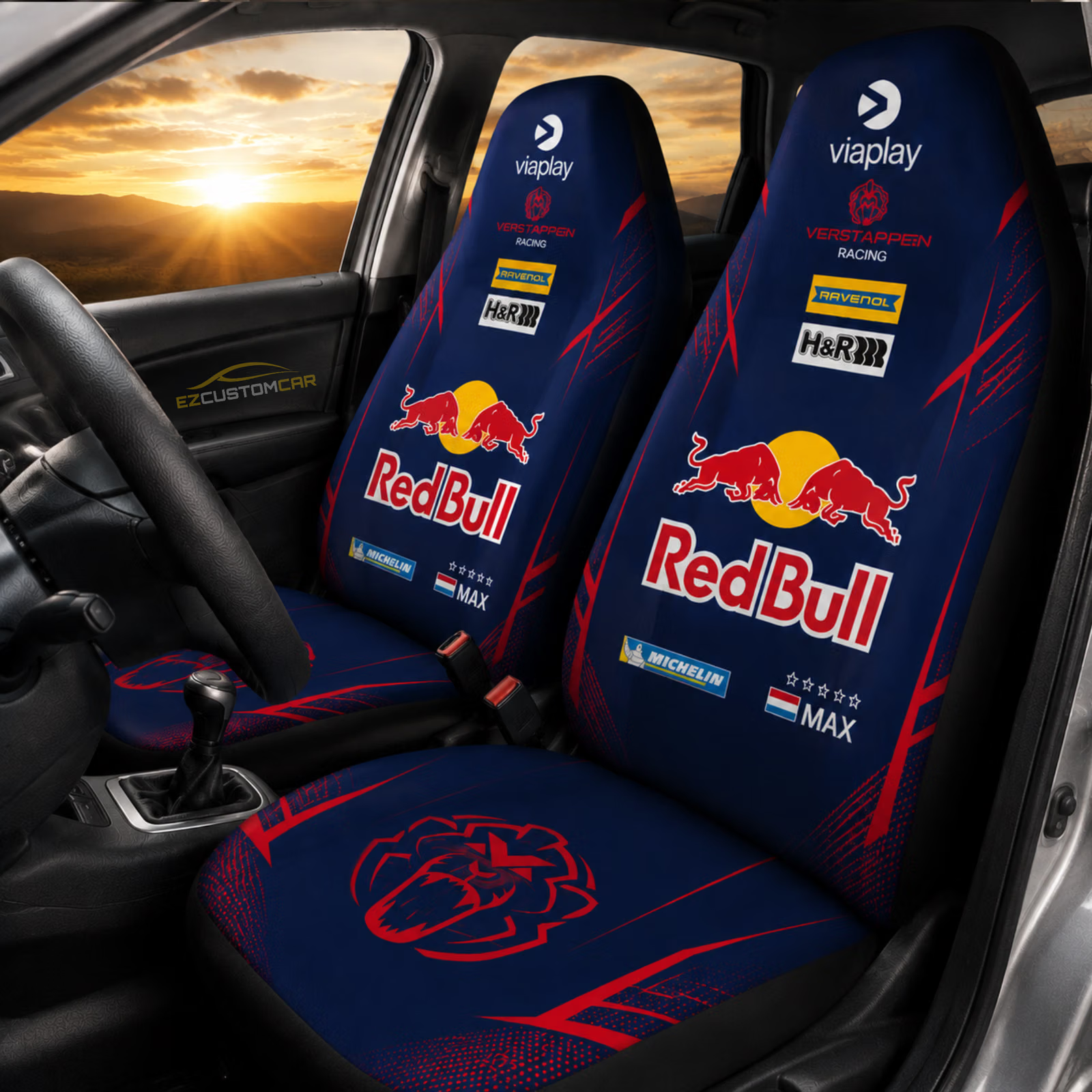
Mad Max AMG GT3 EVO Covers
Inspired by the legendary Green Hell endurance battler. Engineered from high-density poly-spandex with breathable foam lining that hugs factory seat contours, eliminating annoying body slide on high-G highway cloverleafs.
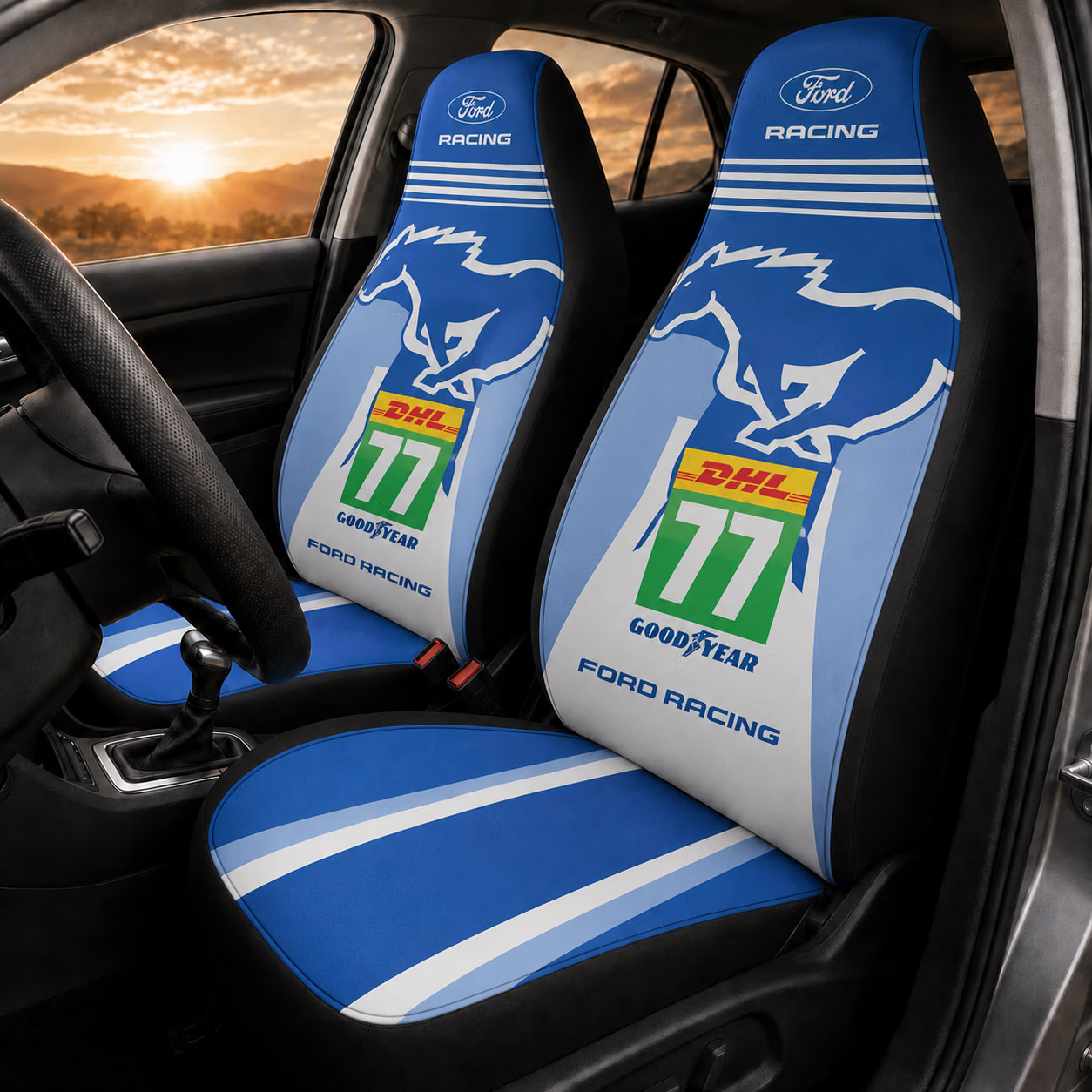
Proton Mustang GT3 #77 Covers
Features authentic WEC paddock styling with resilient multi-way stretch construction. Restores tactile seat friction on worn leather while protecting factory upholstery from daily commuter friction and UV wear.
Drivers looking to eliminate cockpit slip can explore the full catalog of four-way stretch car seat covers engineered specifically for daily driving comfort and side-airbag safety.
Reviewing FIA motorsport cockpit engineering standards further demonstrates why lateral torso retention remains the single most important factor in driver endurance.
Conclusion: Take Control of Your Daily Commute
Analyzing your sim rig vs daily driver habits gives you the tools to eliminate commuter fatigue. By dialing in an upright backrest, anchoring your heel pivot, and restoring tactile bolster friction, you can turn an ordinary commute into an engaging, pain-free drive.